
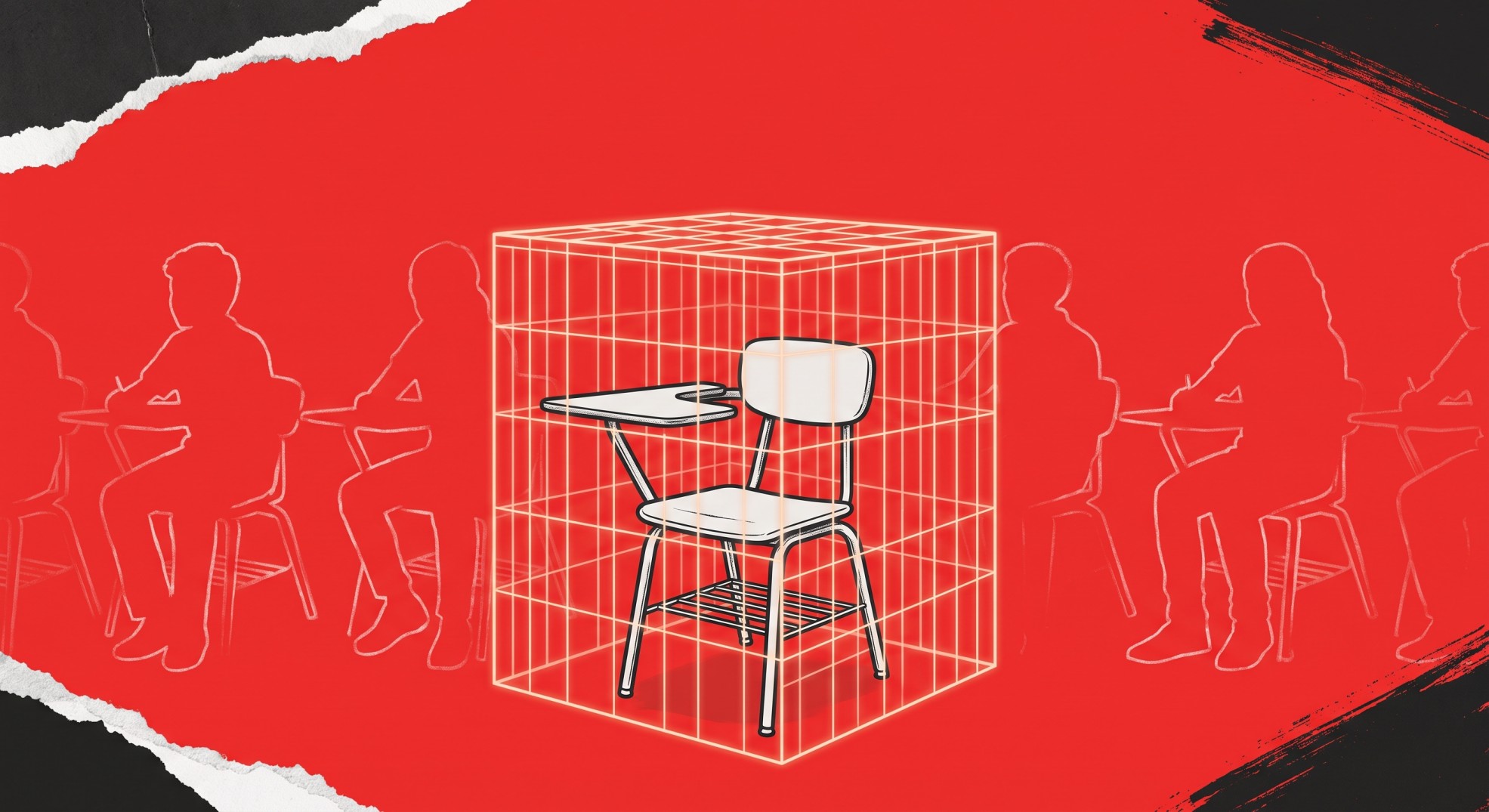
A quiet classroom looks like the safest room in the building. Rows facing forward. Hands up before speaking. Silence the moment the teacher starts talking. It also happens to be the least alive room in the building, and we have spent a century mistaking the first thing for the second.
Control and compliance get sold to us as a package deal, and they always travel together. Control is the parent, compliance is the well behaved child, and between them they run most of the decisions made in most schools on most days. Neither one is about learning. Both are about management. We have simply had a hundred years to forget the difference.
Control Was Built for a Different Job
The system is not broken. It is irrelevant, and those are two very different diagnoses with two very different fixes. A broken system needs repair. An irrelevant system needs replacing, because it is doing exactly what it was designed to do, just for a world that stopped existing decades ago.
That design brief was never secret. Predictable adults for predictable jobs. Rows for factories, bells for shift changes, silence for supervision at scale. Control was not a moral failing bolted onto education by accident. It was the point. It was efficient, it was measurable, and it produced exactly the kind of graduate the economy asked for in 1923.
Nobody has rewritten the brief. We updated the wallpaper, added interactive whiteboards, called it transformation, and kept the architecture of control fully intact underneath. The furniture changed. The philosophy did not.
The Output, Not the Flaw
Here is the uncomfortable part. Compliance is not what happens when the system goes wrong. Compliance is what the system is for. Every rule about queuing in silence, every mark deducted for the wrong colour pen, every lesson plan that leaves no room for a genuine question, is quietly teaching the same lesson underneath whatever the timetable says the lesson is. The lesson is this. Do not deviate. Wait to be told. The person with authority always knows more than you.
That lesson gets learned brilliantly. Ask any classroom of sixteen year olds to raise a genuinely awkward question in front of a room of strangers and watch the hesitation. That is not shyness. That is years of excellent teaching, just not the kind anyone put on the curriculum map.
The Cousin Nobody Names
Compliance rarely gets called by its own name. It travels in disguise as safety, as consistency, as high expectations, as readiness for the real world. Every one of those disguises deserves a harder look.
Safety and control are not the same thing, and treating them as interchangeable is where most of the damage happens. A psychologically safe classroom is one where a student can be wrong out loud without cost. A controlled classroom is one where being wrong out loud rarely gets attempted in the first place, because the risk was never worth it. One produces thinkers. The other produces students who have simply learned where the exits are not.
Consistency has the same problem. There is a version of consistency that means every student gets a fair shot regardless of who is teaching them, and that version is worth protecting fiercely. Then there is the version that means every student gets treated identically regardless of what they actually need, which is not consistency at all. It is uniformity wearing consistency's coat.
What Trust Actually Costs
None of this is an argument for chaos, and it is worth saying plainly because someone always assumes it is. Removing control does not mean removing structure. It means replacing external control with something harder to install and far more durable once it takes, which is trust.
Trust is expensive up front. It means tolerating a noisier room while a student works out how to regulate themselves rather than doing it for them. It means a teacher accepting that a lesson might go somewhere unplanned and useful rather than somewhere planned and safe. It means leaders accepting that a school running well does not have to look identical from one corridor to the next. Control is cheap because it can be installed by decree. Trust has to be built, tested, and rebuilt every single time it gets shaken, which is often.
That is precisely why control wins by default in most buildings. It is faster to implement and easier to inspect. Trust does not show up cleanly in a spreadsheet, so systems addicted to measurement keep reaching for the thing they can count instead of the thing that actually matters.
Five things worth believing
- Control and compliance are not neutral tools. They were designed for a specific job, and that job no longer exists.
- Compliance is not a side effect of a struggling system. In many buildings it is the actual product being manufactured, whatever the mission statement claims.
- Safety and control get confused constantly, and the confusion is doing real harm. Psychological safety allows risk. Control suppresses it.
- Consistency is worth defending. Uniformity dressed up as consistency is worth challenging every time it appears.
- Trust costs more than control to install and pays back more than control ever will. It is the harder, better investment.
None of this means abandoning boundaries, and it is not a call for classrooms without expectations. It is a call to be honest about which one we are actually building, on purpose, every single day. Control will always be the easier habit to reach for, because it is fast, quiet, and looks good from the corridor. Trust is slower and messier and it is the only one of the two that ever produces a young person capable of thinking without permission. That is the actual job. Time we started designing for it.
The strength of the wolf is the pack. Run with us.
Compliance Is the Curriculum
A quiet classroom looks like the safest room in the building. Rows facing forward. Hands up before speaking. Silence the moment the teacher starts talking. It also happens to be the least alive room in the building, and we have spent a century mistaking the first thing for the second.
Control and compliance get sold to us as a package deal, and they always travel together. Control is the parent, compliance is the well behaved child, and between them they run most of the decisions made in most schools on most days. Neither one is about learning. Both are about management. We have simply had a hundred years to forget the difference.
Control Was Built for a Different Job
The system is not broken. It is irrelevant, and those are two very different diagnoses with two very different fixes. A broken system needs repair. An irrelevant system needs replacing, because it is doing exactly what it was designed to do, just for a world that stopped existing decades ago.
That design brief was never secret. Predictable adults for predictable jobs. Rows for factories, bells for shift changes, silence for supervision at scale. Control was not a moral failing bolted onto education by accident. It was the point. It was efficient, it was measurable, and it produced exactly the kind of graduate the economy asked for in 1923.
Nobody has rewritten the brief. We updated the wallpaper, added interactive whiteboards, called it transformation, and kept the architecture of control fully intact underneath. The furniture changed. The philosophy did not.
The Output, Not the Flaw
Here is the uncomfortable part. Compliance is not what happens when the system goes wrong. Compliance is what the system is for. Every rule about queuing in silence, every mark deducted for the wrong colour pen, every lesson plan that leaves no room for a genuine question, is quietly teaching the same lesson underneath whatever the timetable says the lesson is. The lesson is this. Do not deviate. Wait to be told. The person with authority always knows more than you.
That lesson gets learned brilliantly. Ask any classroom of sixteen year olds to raise a genuinely awkward question in front of a room of strangers and watch the hesitation. That is not shyness. That is years of excellent teaching, just not the kind anyone put on the curriculum map.
The Cousin Nobody Names
Compliance rarely gets called by its own name. It travels in disguise as safety, as consistency, as high expectations, as readiness for the real world. Every one of those disguises deserves a harder look.
Safety and control are not the same thing, and treating them as interchangeable is where most of the damage happens. A psychologically safe classroom is one where a student can be wrong out loud without cost. A controlled classroom is one where being wrong out loud rarely gets attempted in the first place, because the risk was never worth it. One produces thinkers. The other produces students who have simply learned where the exits are not.
Consistency has the same problem. There is a version of consistency that means every student gets a fair shot regardless of who is teaching them, and that version is worth protecting fiercely. Then there is the version that means every student gets treated identically regardless of what they actually need, which is not consistency at all. It is uniformity wearing consistency's coat.
What Trust Actually Costs
None of this is an argument for chaos, and it is worth saying plainly because someone always assumes it is. Removing control does not mean removing structure. It means replacing external control with something harder to install and far more durable once it takes, which is trust.
Trust is expensive up front. It means tolerating a noisier room while a student works out how to regulate themselves rather than doing it for them. It means a teacher accepting that a lesson might go somewhere unplanned and useful rather than somewhere planned and safe. It means leaders accepting that a school running well does not have to look identical from one corridor to the next. Control is cheap because it can be installed by decree. Trust has to be built, tested, and rebuilt every single time it gets shaken, which is often.
That is precisely why control wins by default in most buildings. It is faster to implement and easier to inspect. Trust does not show up cleanly in a spreadsheet, so systems addicted to measurement keep reaching for the thing they can count instead of the thing that actually matters.
Five things worth believing
- Control and compliance are not neutral tools. They were designed for a specific job, and that job no longer exists.
- Compliance is not a side effect of a struggling system. In many buildings it is the actual product being manufactured, whatever the mission statement claims.
- Safety and control get confused constantly, and the confusion is doing real harm. Psychological safety allows risk. Control suppresses it.
- Consistency is worth defending. Uniformity dressed up as consistency is worth challenging every time it appears.
- Trust costs more than control to install and pays back more than control ever will. It is the harder, better investment.
None of this means abandoning boundaries, and it is not a call for classrooms without expectations. It is a call to be honest about which one we are actually building, on purpose, every single day. Control will always be the easier habit to reach for, because it is fast, quiet, and looks good from the corridor. Trust is slower and messier and it is the only one of the two that ever produces a young person capable of thinking without permission. That is the actual job. Time we started designing for it.
The strength of the wolf is the pack. Run with us.