
Guest written by Wolfpack member, Tara Jones
On Barack Obama, storytelling and the quiet work of reconnecting
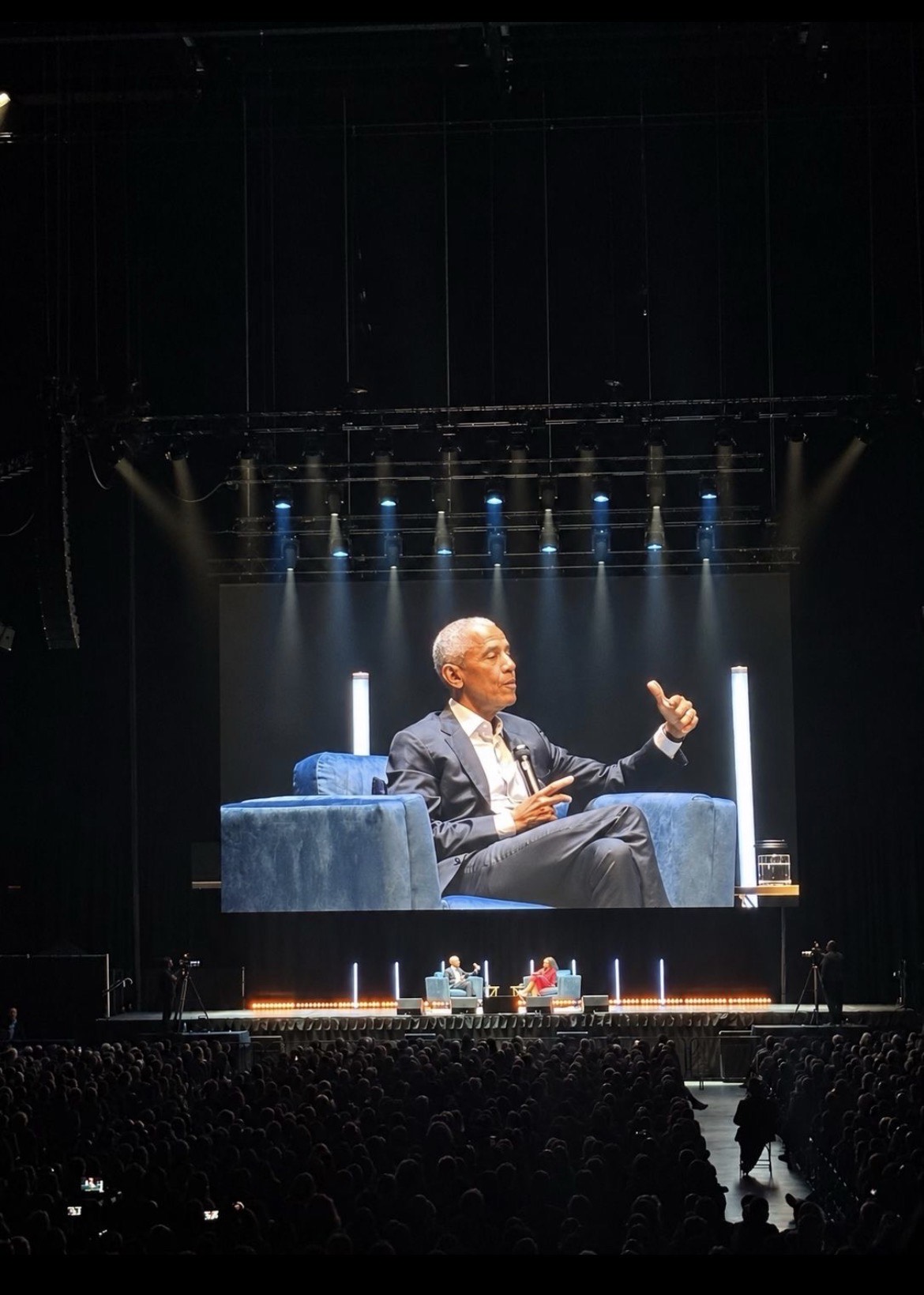
I didn’t go for the politics. I went to be in the presence of one of the greatest storytellers of our time. And, as expected, he spoke about stories. The need to rebuild trust. To prioritise communities and face-to-face conversation. To confront the complexity of being human. And, in a world where misinformation spreads at speed, the loss of faith in the stories we’ve told.
I left thinking less about politics and more about people. About how we connect, how we understand one another and how we might begin to rebuild some of the trust that seems to be slipping away. Because stories are not simply a way of communicating. They are a way of understanding. They allow us to see the experiences that have shaped someone else, to understand why they might see the world differently and, perhaps, to reconsider some of our own assumptions. In that sense, stories are a form of soft debate.
Not the kind where we arrive armed with our arguments, determined to win. But a gentler exchange, where understanding comes before judgement and curiosity takes the place of confrontation. Perhaps the best kind of debate doesn’t feel like debate at all. Perhaps it begins with someone telling us a story.
And us being willing to listen.
The stories we remember
I was transported back to being a child on holiday, allowed to fall asleep on a lounger while the adults chatted late into the evening. My parents’ best friends were headteachers, and they were wonderful storytellers. I didn’t always understand the context, but I loved the rhythm of their stories, the laughter and the way one person’s experience would prompt another’s. There was a natural flow to those conversations. People listened, reflected, disagreed and added their own stories to the mix. There was no sneaking off with a device. No algorithm deciding what deserved our attention next. Just people, present with one another.
I didn’t recognise it at the time, but there was something important happening in those moments. Stories were creating connection. They were helping people make sense of the world and of one another. And they were doing it without anyone needing to stand up and announce that a debate was taking place.
We often talk about the importance of bringing people together, but perhaps we underestimate the role of the stories we share when we do. Stories make the abstract personal. They give context to opinions. They remind us that behind a belief is a person, and behind that person is a life we may know very little about.
We might still disagree. But it becomes harder to dismiss someone when we have taken the time to understand their story.
The Barack we needed
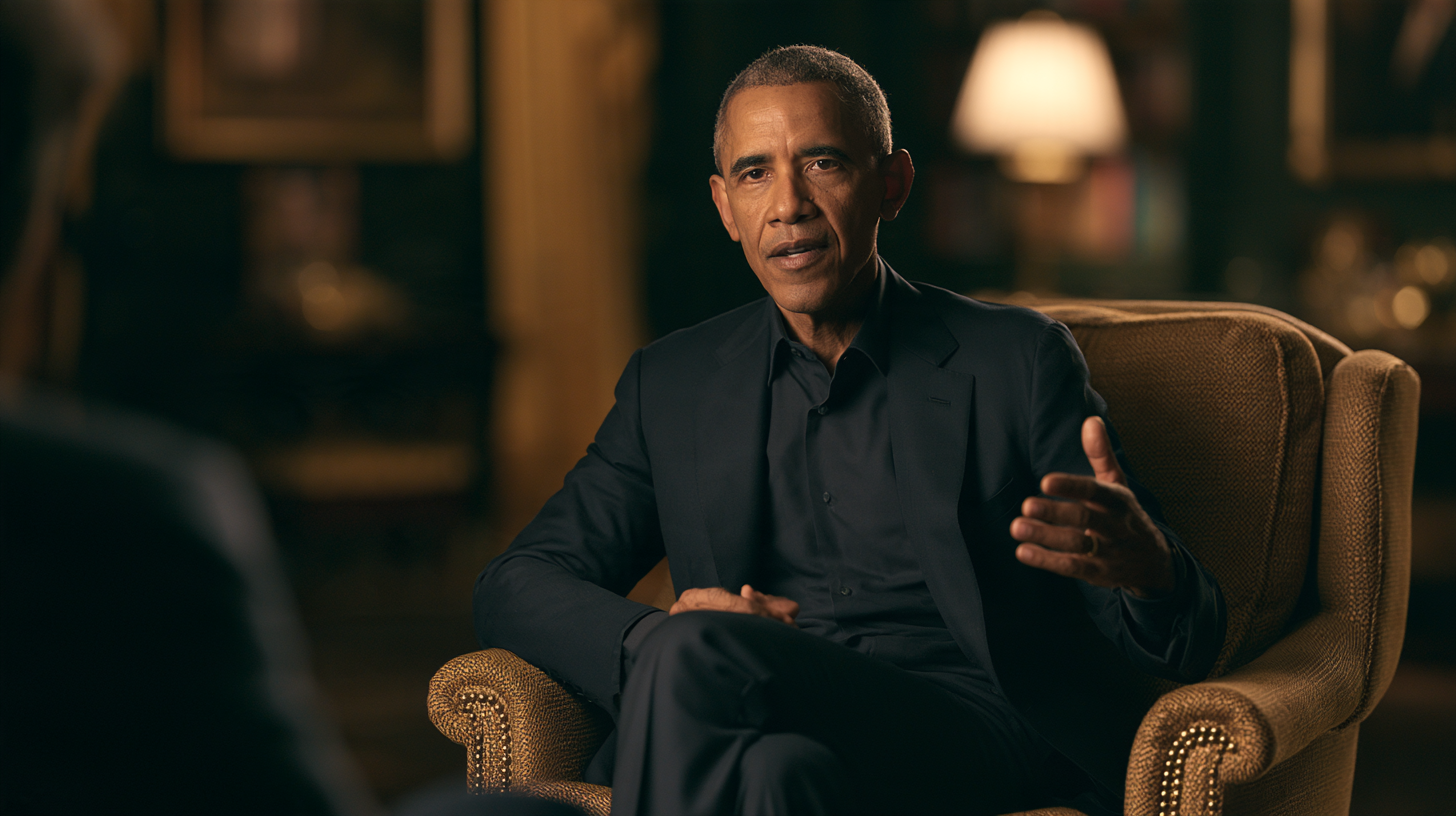
On reflection, I don’t think we needed the Barack Obama who won hearts at rallies, electrifying crowds with the force of his rhetoric. We needed the Barack who spoke that night.The elder statesman. The chief. A man who has occupied one of the most powerful offices in the world and, having stepped away from the job, can draw on that experience to reflect on what it means to be human.
Not rallying us. Not telling us what to think. But offering quieter reminders of how we might reconnect with one another.
It felt like a fireside conversation.
And that felt significant.
At a time when political rhetoric is so often loud, brash and divisive, there was something powerful about a voice that invited reflection rather than reaction. We are surrounded by political performances designed to capture our attention, win our allegiance and draw a clear line between us and them. But we don’t always need another performance. Sometimes we need someone who has seen enough of the world to understand its complexity, who can speak from experience and remind us that being human is rarely straightforward.
People are complicated. Our experiences shape us in different ways. Our beliefs are influenced by the communities we grow up in, the people we encounter and the stories we carry with us. Understanding that complexity doesn’t mean abandoning our convictions. It means recognising that we might have something to learn from people whose experiences differ from our own.
That is the quiet power of storytelling. It opens a door to understanding without demanding agreement. And perhaps, in a world increasingly organised around opposing positions, that is exactly the kind of conversation we need.
Change begins person to person
We often look for change at scale. We want the policy, the movement, the intervention that will rebuild trust and bring people together. We look for solutions big enough to meet the size of the problems we face. But understanding begins much closer to home.
It starts with one person listening to another. With asking a question instead of making an assumption. With hearing someone’s experience without immediately preparing a counterargument. These moments can seem small, but their effects need not be. When we understand one person a little better, we may approach the next conversation differently. We might become more curious, less defensive and more willing to sit with a difference of opinion. Those changes ripple outwards. Across families, workplaces, communities and, over time, the wider mosaic of society.
This isn’t to suggest that conversation alone will solve deep-rooted social or political problems. Nor does listening mean tolerating misinformation or abandoning the need to challenge harmful ideas. But meaningful disagreement requires us to see one another as human beings first.
Trust is built through relationships. Relationships are built through encounters. And those encounters become more meaningful when we make room for the stories that help us understand one another. A society is not held together by agreement alone. It is held together by our ability to navigate disagreement without losing sight of our shared humanity.
Stories can help us do that.
Democracy and the algorithms
There was one thought from the evening that stayed with me: democracy is vulnerable to the algorithms. It felt like a mic-drop moment because it brought the conversation about human connection into sharp focus. We live in a world where stories have never been easier to share, yet meaningful listening can feel increasingly elusive. Our attention is fragmented. Our conversations are mediated by screens. The algorithms that shape what we see can reward outrage, reinforce existing beliefs and serve us more of what we already think we know. We can find ourselves surrounded by stories that confirm our worldview while becoming less exposed to the experiences that might challenge it.
And when stories become tools of manipulation, when misinformation erodes trust and people are reduced to caricatures of their political beliefs, something important is lost. The ability to see one another clearly. Democracy depends on more than voting. It also relies on our ability to engage with different perspectives, question what we are told and make sense of competing accounts of the world. It requires us to recognise that the world is more complicated than any single story can capture.
If the stories we encounter are increasingly shaped to provoke, polarise or persuade us, we risk losing the common ground on which meaningful public conversation depends. Technology can connect us across extraordinary distances. But connection is not the same as understanding. And consuming an endless stream of other people’s words is not the same as listening to them. We need to think carefully about the stories we tell, the stories we believe and the stories we allow to shape our understanding of other people. We also need to protect the space for conversations that algorithms cannot replicate: the unpredictable, sometimes uncomfortable, often joyful exchanges that happen when people sit together and talk.
Less firestorm, more fireside
Perhaps what I took away from the evening was less about politics than about the kind of society we want to create. One in which we are quick to react, or one in which we make room to reflect. One in which we sort people into opposing camps, or one in which we remain curious about the experiences that brought them there. One in which every conversation becomes a contest, or one in which a story can change our minds without anyone needing to declare a winner.
Barack felt like the elder statesman we needed: not the rallying voice, but the voice by the fireside. Calmly drawing on a lifetime of experience to remind us of some of the simplest, and perhaps most difficult, things we can do.
Listen.
Be curious.
Make time for one another.
Recognise the complexity of being human.
And understand that the person sitting opposite you has a story worth hearing.
Key Takeaways
- Stories are soft debate. They build understanding before judgement, letting curiosity replace confrontation. The best debate often doesn't feel like debate at all.
- Behind every belief is a person. Stories give context to opinions. We can still disagree, but it's harder to dismiss someone once we know their story.
- Change starts small. We look for big policies and movements, but trust is built one conversation at a time, and those moments ripple outwards.
- Connection isn't understanding. Algorithms reward outrage and reinforce what we already believe. We need to protect the unpredictable, face-to-face conversations technology can't replicate.
- Less firestorm, more fireside. We don't need more performances. We need to put devices down, listen, and make space for someone else's story.
We cannot rebuild trust through rhetoric alone. We cannot overcome division by shouting louder. And we cannot expect to understand one another if we never create the conditions in which understanding can happen. It starts person to person. Conversation by conversation. Story by story. Perhaps we need fewer performances and more conversations. Less firestorm, more fireside. More moments when we put our devices down, sit together and allow ourselves to be changed, even a little, by what someone else has to say.
Be human. Be connected. Begin to commune again, in a real way.
Because sometimes the most powerful thing we can do is not to tell a better story.
It is to make space for someone else’s.
Less Firestorm, More Fireside
Guest written by Wolfpack member, Tara Jones
On Barack Obama, storytelling and the quiet work of reconnecting
I didn’t go for the politics. I went to be in the presence of one of the greatest storytellers of our time. And, as expected, he spoke about stories. The need to rebuild trust. To prioritise communities and face-to-face conversation. To confront the complexity of being human. And, in a world where misinformation spreads at speed, the loss of faith in the stories we’ve told.
I left thinking less about politics and more about people. About how we connect, how we understand one another and how we might begin to rebuild some of the trust that seems to be slipping away. Because stories are not simply a way of communicating. They are a way of understanding. They allow us to see the experiences that have shaped someone else, to understand why they might see the world differently and, perhaps, to reconsider some of our own assumptions. In that sense, stories are a form of soft debate.
Not the kind where we arrive armed with our arguments, determined to win. But a gentler exchange, where understanding comes before judgement and curiosity takes the place of confrontation. Perhaps the best kind of debate doesn’t feel like debate at all. Perhaps it begins with someone telling us a story.
And us being willing to listen.
The stories we remember
I was transported back to being a child on holiday, allowed to fall asleep on a lounger while the adults chatted late into the evening. My parents’ best friends were headteachers, and they were wonderful storytellers. I didn’t always understand the context, but I loved the rhythm of their stories, the laughter and the way one person’s experience would prompt another’s. There was a natural flow to those conversations. People listened, reflected, disagreed and added their own stories to the mix. There was no sneaking off with a device. No algorithm deciding what deserved our attention next. Just people, present with one another.
I didn’t recognise it at the time, but there was something important happening in those moments. Stories were creating connection. They were helping people make sense of the world and of one another. And they were doing it without anyone needing to stand up and announce that a debate was taking place.
We often talk about the importance of bringing people together, but perhaps we underestimate the role of the stories we share when we do. Stories make the abstract personal. They give context to opinions. They remind us that behind a belief is a person, and behind that person is a life we may know very little about.
We might still disagree. But it becomes harder to dismiss someone when we have taken the time to understand their story.
The Barack we needed
On reflection, I don’t think we needed the Barack Obama who won hearts at rallies, electrifying crowds with the force of his rhetoric. We needed the Barack who spoke that night.The elder statesman. The chief. A man who has occupied one of the most powerful offices in the world and, having stepped away from the job, can draw on that experience to reflect on what it means to be human.
Not rallying us. Not telling us what to think. But offering quieter reminders of how we might reconnect with one another.
It felt like a fireside conversation.
And that felt significant.
At a time when political rhetoric is so often loud, brash and divisive, there was something powerful about a voice that invited reflection rather than reaction. We are surrounded by political performances designed to capture our attention, win our allegiance and draw a clear line between us and them. But we don’t always need another performance. Sometimes we need someone who has seen enough of the world to understand its complexity, who can speak from experience and remind us that being human is rarely straightforward.
People are complicated. Our experiences shape us in different ways. Our beliefs are influenced by the communities we grow up in, the people we encounter and the stories we carry with us. Understanding that complexity doesn’t mean abandoning our convictions. It means recognising that we might have something to learn from people whose experiences differ from our own.
That is the quiet power of storytelling. It opens a door to understanding without demanding agreement. And perhaps, in a world increasingly organised around opposing positions, that is exactly the kind of conversation we need.
Change begins person to person
We often look for change at scale. We want the policy, the movement, the intervention that will rebuild trust and bring people together. We look for solutions big enough to meet the size of the problems we face. But understanding begins much closer to home.
It starts with one person listening to another. With asking a question instead of making an assumption. With hearing someone’s experience without immediately preparing a counterargument. These moments can seem small, but their effects need not be. When we understand one person a little better, we may approach the next conversation differently. We might become more curious, less defensive and more willing to sit with a difference of opinion. Those changes ripple outwards. Across families, workplaces, communities and, over time, the wider mosaic of society.
This isn’t to suggest that conversation alone will solve deep-rooted social or political problems. Nor does listening mean tolerating misinformation or abandoning the need to challenge harmful ideas. But meaningful disagreement requires us to see one another as human beings first.
Trust is built through relationships. Relationships are built through encounters. And those encounters become more meaningful when we make room for the stories that help us understand one another. A society is not held together by agreement alone. It is held together by our ability to navigate disagreement without losing sight of our shared humanity.
Stories can help us do that.
Democracy and the algorithms
There was one thought from the evening that stayed with me: democracy is vulnerable to the algorithms. It felt like a mic-drop moment because it brought the conversation about human connection into sharp focus. We live in a world where stories have never been easier to share, yet meaningful listening can feel increasingly elusive. Our attention is fragmented. Our conversations are mediated by screens. The algorithms that shape what we see can reward outrage, reinforce existing beliefs and serve us more of what we already think we know. We can find ourselves surrounded by stories that confirm our worldview while becoming less exposed to the experiences that might challenge it.
And when stories become tools of manipulation, when misinformation erodes trust and people are reduced to caricatures of their political beliefs, something important is lost. The ability to see one another clearly. Democracy depends on more than voting. It also relies on our ability to engage with different perspectives, question what we are told and make sense of competing accounts of the world. It requires us to recognise that the world is more complicated than any single story can capture.
If the stories we encounter are increasingly shaped to provoke, polarise or persuade us, we risk losing the common ground on which meaningful public conversation depends. Technology can connect us across extraordinary distances. But connection is not the same as understanding. And consuming an endless stream of other people’s words is not the same as listening to them. We need to think carefully about the stories we tell, the stories we believe and the stories we allow to shape our understanding of other people. We also need to protect the space for conversations that algorithms cannot replicate: the unpredictable, sometimes uncomfortable, often joyful exchanges that happen when people sit together and talk.
Less firestorm, more fireside
Perhaps what I took away from the evening was less about politics than about the kind of society we want to create. One in which we are quick to react, or one in which we make room to reflect. One in which we sort people into opposing camps, or one in which we remain curious about the experiences that brought them there. One in which every conversation becomes a contest, or one in which a story can change our minds without anyone needing to declare a winner.
Barack felt like the elder statesman we needed: not the rallying voice, but the voice by the fireside. Calmly drawing on a lifetime of experience to remind us of some of the simplest, and perhaps most difficult, things we can do.
Listen.
Be curious.
Make time for one another.
Recognise the complexity of being human.
And understand that the person sitting opposite you has a story worth hearing.
Key Takeaways
- Stories are soft debate. They build understanding before judgement, letting curiosity replace confrontation. The best debate often doesn't feel like debate at all.
- Behind every belief is a person. Stories give context to opinions. We can still disagree, but it's harder to dismiss someone once we know their story.
- Change starts small. We look for big policies and movements, but trust is built one conversation at a time, and those moments ripple outwards.
- Connection isn't understanding. Algorithms reward outrage and reinforce what we already believe. We need to protect the unpredictable, face-to-face conversations technology can't replicate.
- Less firestorm, more fireside. We don't need more performances. We need to put devices down, listen, and make space for someone else's story.
We cannot rebuild trust through rhetoric alone. We cannot overcome division by shouting louder. And we cannot expect to understand one another if we never create the conditions in which understanding can happen. It starts person to person. Conversation by conversation. Story by story. Perhaps we need fewer performances and more conversations. Less firestorm, more fireside. More moments when we put our devices down, sit together and allow ourselves to be changed, even a little, by what someone else has to say.
Be human. Be connected. Begin to commune again, in a real way.
Because sometimes the most powerful thing we can do is not to tell a better story.
It is to make space for someone else’s.