
A young man at an employability conference was asked to share his journey into work. Over lunch, he and Tina Harrigan-James got talking about the words used to describe people like him. Neither of them liked NEET. So he offered an alternative. LEET. Looking for education, employment or training.
Tina, a former English teacher, shared that story on LinkedIn this week. One letter. That is all it took to turn a status into an action, a verdict into a direction of travel. It is a lesson in grammar as much as policy.
The Tyranny of the Noun
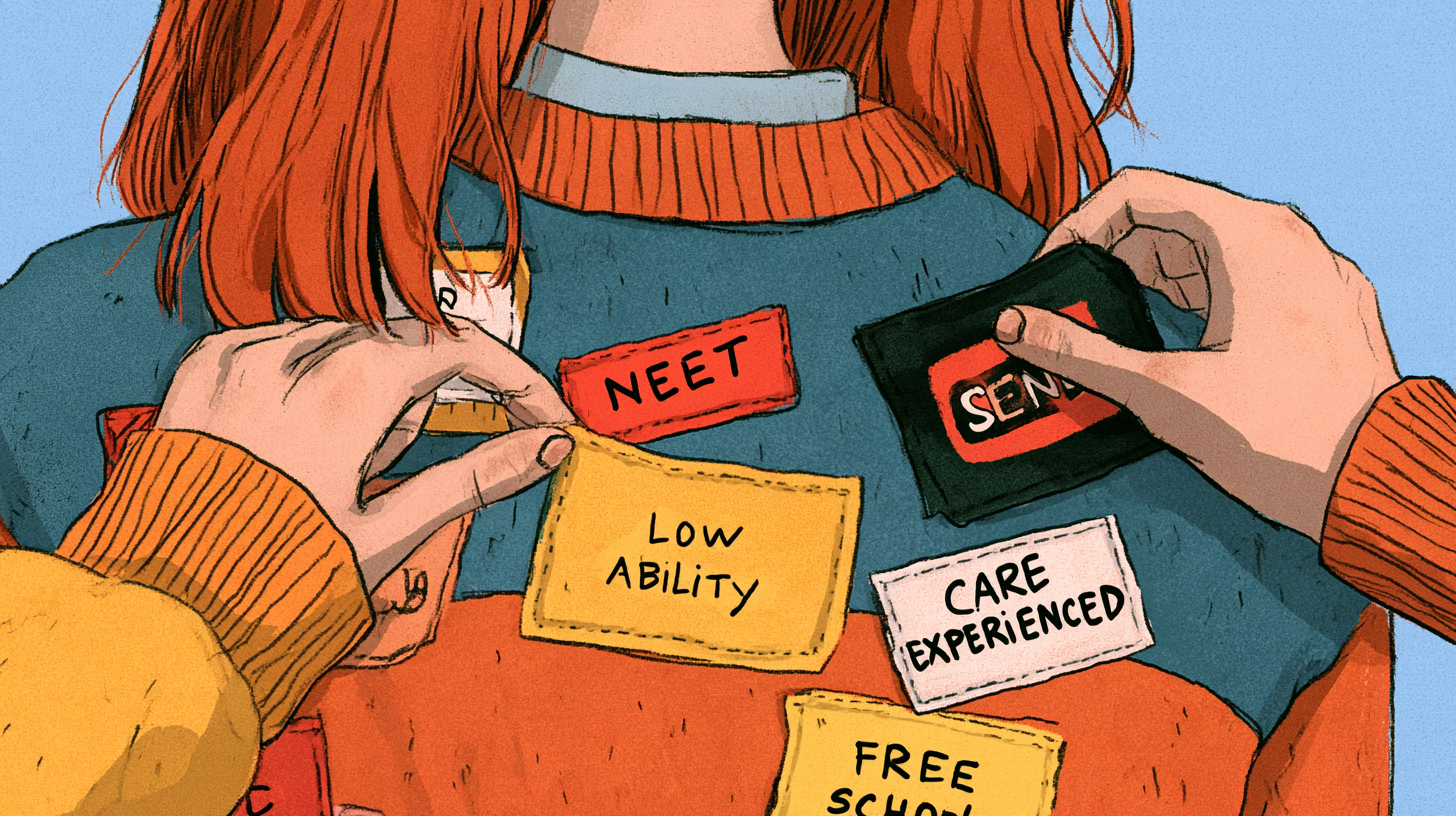
Nouns are where we put things we have finished thinking about. A NEET. A SEND kid. The low-ability set. The disadvantaged cohort. The hard-to-reach learner. The non-completer in a university retention spreadsheet. Each one is a jar with the lid screwed on tight.
There's an old advert Ben has quoted in RE classrooms, inclusion keynotes and on the podcast more times than he can count. Its message fits on the side of a jam jar. "Labels are for jars (or cans), not people."
A noun tells you what something is. Permanently. Once a young person becomes a noun in our systems, they get filed, funded and tracked as that noun. The label stops describing them and starts deciding for them.
What the N Actually Does
The N in NEET defines a whole generation by absence. Not in this. Not in that. Not in anything. Tina put it perfectly when she said the "Not" implies stagnant inactivity, a passive acceptance of nothingness. The evidence says otherwise. Alan Milburn, in the foreword to his review of young people outside education and work, admits he has never particularly liked the term. His own interim findings show why. 84% of NEET young people surveyed want a job or training. The people we describe by what they are not are, overwhelmingly, looking.
So the label isn't just unkind. On the system's own data, it is inaccurate.
Looking Moves the Burden
What we love about LEET is where it puts the responsibility. A noun locates the problem inside the young person. A verb locates it in the relationship between that young person and the world around them.
If someone is looking, the obvious next question is what we are offering them to find. Suddenly government, employers, colleges, universities and recruiters are in the sentence too.
FE colleagues know this better than anyone. They work with young people the school system has already labelled, and they watch those labels fall away when someone offers a course, a placement or a mentor that fits. That's what happens when we treat a person as a verb.
Crisis Is a Noun Too
When Ben replied to Tina's post, he flagged another word that follows NEET around like a shadow. Crisis. The NEET crisis sits alongside the migrant crisis, the economic crisis, the masculinity crisis, the AI crisis, the social media crisis and the mental health crisis. Everything is a crisis now. Even the Milburn review, written by someone who dislikes the NEET label, reaches for "the NEET crisis".
One answer might beKeith Grint's work on wicked problems, something Shonogh Pilgrim helped Ben think through more clearly. Grint separates problems into tame, critical and wicked. Critical problems, the genuine crises, call for command. Wicked problems have no single cause, no single fix and no clear finish line. They need leadership that asks better questions, not louder answers.
Young people's routes into learning and work are a wicked problem. Call it a crisis and we invite the wrong response. Short-term initiatives. Another programme bolted onto an irrelevant system. Panic dressed up as policy.
Teachers Already Know This
None of this is news to teachers. Every one of us knows a young person who lived down to a label, and another who outgrew one because someone used a different word at the right moment. That language rarely starts in the classroom. It comes down from funding categories, dashboards and policy documents, and educators are left to translate it back into something human.
The system was built to sort people into the right drawer for an industrial age. That age has gone. The drawers remain.
Five Takeaways
- Nouns fix, verbs move. When we describe young people by what they are doing rather than what they lack, we leave room for them to change.
- The N is wrong on the evidence. The vast majority of young people outside education and work want a job or training. Our language should say so.
- Verbs share the responsibility. "Looking" puts employers, colleges, universities and government into the sentence alongside the young person.
- Stop calling everything a crisis. Wicked problems need patient leadership and better questions, not command-and-control panic.
- Audit our own vocabulary. From reports to parents' evenings to HE retention meetings, every label we use is a choice. We can choose better ones.
Words aren't decoration. They are the first decision we make about a person, often before we have met them. When the language of education is full of nouns, lids and alarms, we design services for the labels rather than the young people behind them. The fix doesn't need a white paper. It starts in the next email, the next data drop, the next conversation about a learner who is struggling. Swap the noun for a verb. Swap the crisis for a question.
The young man Tina met already knew who he was. He was looking. The least we can do is look back, together. Because the strength of the wolf is the pack, and the strength of the pack is every single one of us, unlabelled.
Young People Are Verbs, Not Nouns
A young man at an employability conference was asked to share his journey into work. Over lunch, he and Tina Harrigan-James got talking about the words used to describe people like him. Neither of them liked NEET. So he offered an alternative. LEET. Looking for education, employment or training.
Tina, a former English teacher, shared that story on LinkedIn this week. One letter. That is all it took to turn a status into an action, a verdict into a direction of travel. It is a lesson in grammar as much as policy.
The Tyranny of the Noun
Nouns are where we put things we have finished thinking about. A NEET. A SEND kid. The low-ability set. The disadvantaged cohort. The hard-to-reach learner. The non-completer in a university retention spreadsheet. Each one is a jar with the lid screwed on tight.
There's an old advert Ben has quoted in RE classrooms, inclusion keynotes and on the podcast more times than he can count. Its message fits on the side of a jam jar. "Labels are for jars (or cans), not people."
A noun tells you what something is. Permanently. Once a young person becomes a noun in our systems, they get filed, funded and tracked as that noun. The label stops describing them and starts deciding for them.
What the N Actually Does
The N in NEET defines a whole generation by absence. Not in this. Not in that. Not in anything. Tina put it perfectly when she said the "Not" implies stagnant inactivity, a passive acceptance of nothingness. The evidence says otherwise. Alan Milburn, in the foreword to his review of young people outside education and work, admits he has never particularly liked the term. His own interim findings show why. 84% of NEET young people surveyed want a job or training. The people we describe by what they are not are, overwhelmingly, looking.
So the label isn't just unkind. On the system's own data, it is inaccurate.
Looking Moves the Burden
What we love about LEET is where it puts the responsibility. A noun locates the problem inside the young person. A verb locates it in the relationship between that young person and the world around them.
If someone is looking, the obvious next question is what we are offering them to find. Suddenly government, employers, colleges, universities and recruiters are in the sentence too.
FE colleagues know this better than anyone. They work with young people the school system has already labelled, and they watch those labels fall away when someone offers a course, a placement or a mentor that fits. That's what happens when we treat a person as a verb.
Crisis Is a Noun Too
When Ben replied to Tina's post, he flagged another word that follows NEET around like a shadow. Crisis. The NEET crisis sits alongside the migrant crisis, the economic crisis, the masculinity crisis, the AI crisis, the social media crisis and the mental health crisis. Everything is a crisis now. Even the Milburn review, written by someone who dislikes the NEET label, reaches for "the NEET crisis".
One answer might beKeith Grint's work on wicked problems, something Shonogh Pilgrim helped Ben think through more clearly. Grint separates problems into tame, critical and wicked. Critical problems, the genuine crises, call for command. Wicked problems have no single cause, no single fix and no clear finish line. They need leadership that asks better questions, not louder answers.
Young people's routes into learning and work are a wicked problem. Call it a crisis and we invite the wrong response. Short-term initiatives. Another programme bolted onto an irrelevant system. Panic dressed up as policy.
Teachers Already Know This
None of this is news to teachers. Every one of us knows a young person who lived down to a label, and another who outgrew one because someone used a different word at the right moment. That language rarely starts in the classroom. It comes down from funding categories, dashboards and policy documents, and educators are left to translate it back into something human.
The system was built to sort people into the right drawer for an industrial age. That age has gone. The drawers remain.
Five Takeaways
- Nouns fix, verbs move. When we describe young people by what they are doing rather than what they lack, we leave room for them to change.
- The N is wrong on the evidence. The vast majority of young people outside education and work want a job or training. Our language should say so.
- Verbs share the responsibility. "Looking" puts employers, colleges, universities and government into the sentence alongside the young person.
- Stop calling everything a crisis. Wicked problems need patient leadership and better questions, not command-and-control panic.
- Audit our own vocabulary. From reports to parents' evenings to HE retention meetings, every label we use is a choice. We can choose better ones.
Words aren't decoration. They are the first decision we make about a person, often before we have met them. When the language of education is full of nouns, lids and alarms, we design services for the labels rather than the young people behind them. The fix doesn't need a white paper. It starts in the next email, the next data drop, the next conversation about a learner who is struggling. Swap the noun for a verb. Swap the crisis for a question.
The young man Tina met already knew who he was. He was looking. The least we can do is look back, together. Because the strength of the wolf is the pack, and the strength of the pack is every single one of us, unlabelled.