
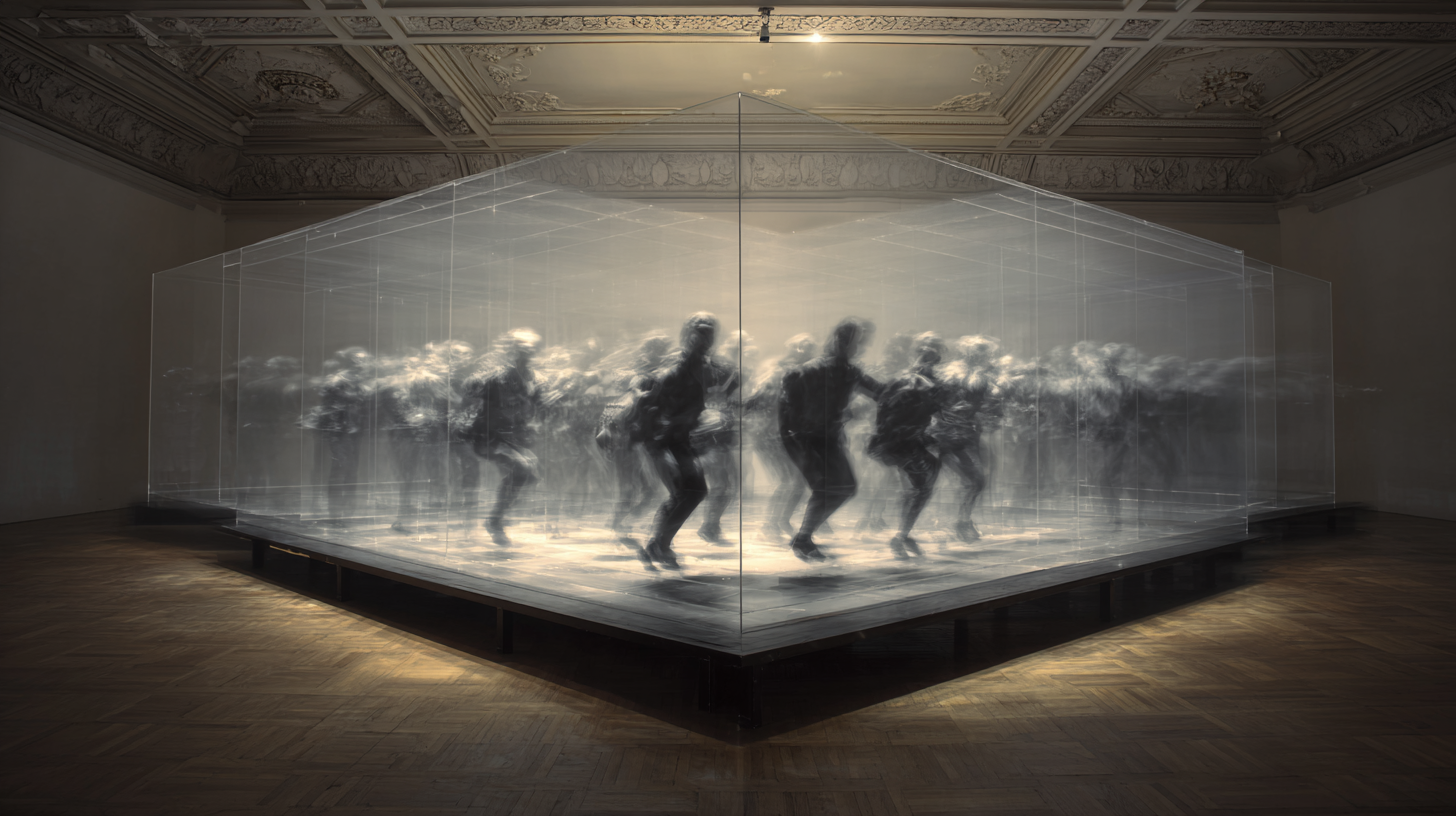
Right, let's cut through the bollocks and face facts: we're living in an echo chamber, and it's royally mucking up our education system.
You know what I'm on about - those cosy little beliefs we all nod along to, like bobbleheads on a dashboard. "Exams are the fairest way to measure intelligence." "The 9-to-3 school day is sacred." "Teachers must be all-knowing sages." "Uniform prevents bullying." "Mobile phones need to be banned."
These collective illusions are like a straitjacket on our schools, choking the life out of innovation faster than you can say "Ofsted inspection". We're so busy agreeing with each other, we've forgotten to ask if we're even facing the right bloody direction. (Now, don't get us wrong: the move away from single-grade Ofsted inspections could not be more welcomed; well, unless they were scrapped entirely but beggars can't be choosers...)
Take the collective delusion that silence equals learning. Walk into any "good" school, and you'll find corridors quieter than a library full of mimes. But we aren't so sure. Learning's messy, noisy, and sometimes looks like pure chaos. We're so obsessed with order, we're stamping out the very spark we should be fanning into flames.
Or how about the grand illusion that technology is the silver bullet? Chuck a few iPads into a classroom, and suddenly we're "21st-century learning". If we're not fundamentally rethinking how we teach, we're just putting lipstick on a pig - and a very expensive pig at that.
Or what about the idea that teachers must be perfect role models, paragons of virtue who never put a foot wrong. What a load of codswallop (how good is that word? We think it needs bringing back!) We're setting impossible standards and wondering why teacher burnout is through the roof. News flash: teachers are human, and it's high time we embraced that humanity in all its glorious, messy imperfection. And in fact, admitting mistakes is every bit a learning opportunity as the grandiose 70-slide PowerPoint on Tudor England.
So, what's the antidote to this epidemic of collective delusion? It's time to channel our inner toddlers and start asking "Why?" relentlessly. Why do we group kids by age instead of ability or interest? Why do we insist on teaching subjects in isolation when the real world is gloriously interdisciplinary? Why, in the name of all that's holy, are we still banging on about cursive writing in the age of voice-to-text?
It's time to be the pebble in the shoe of education, the grit in the oyster. We need to cultivate a healthy disrespect for the status quo. Let's create schools where questioning is not just encouraged but required. Where sacred cows are routinely tipped, examined, and either reinvented or consigned to the knacker's yard.
Challenging collective illusions is about as comfortable as a hedgehog in your Y-fronts (thanks, Claude.ai for that metaphor!). It means facing up to the possibility that we've been barking up the wrong tree. It means admitting that maybe, just maybe, we don't have all the answers. And for a profession that's built on being the font of all knowledge, that's a bitter pill to swallow.
Yet swallow it we must, if we're serious about dragging education into the 21st century. We need to create a culture where "I don't know" is not an admission of failure, but the start of an exciting journey of discovery. Where we value questions over answers, curiosity over certainty.
So, here's your homework before we assign THAT to the scrapheap:
1. Question Everything: Make it your mission to challenge at least one "established truth" in education every week. Be the devil's advocate, the professional pain in the arse.
2. Embrace Discomfort: If an idea makes you squirm, it's probably worth exploring. Get comfortable with being uncomfortable.
3. Seek Out Diverse Voices: Break out of your echo chamber. Actively seek perspectives that challenge your own. Yes, even if it means talking to that colleague who drives you up the wall.
4. Experiment Shamelessly: Turn your classroom into a learning laboratory. Try the ridiculous, the outrageous, the "it's so crazy it just might work" ideas (just make sure you reflect on what happened)
5. Celebrate Failure: When an experiment goes tits up (and it will), throw a party. Each failure is a step closer to breakthrough.
Every great innovation in education started as a crazy idea that challenged the status quo. The printing press was once considered a threat to education. Imagine where we'd be if that collective illusion had prevailed.
It's time to be the Galileos of education, daring to suggest that maybe, just maybe, everything doesn't revolve around our long-held beliefs. It's time to flip the script, rock the boat, and any other cliché that means challenging the norm.
Because here's the truth, the whole truth, and nothing but the truth: our collective illusions are holding us back. They're the emperor's new clothes of education, and it's high time someone had the guts to shout that the emperor is starkers.
Who's ready to be the pebble, the grit, the professional pain in the arse that education so desperately needs? The future of education is calling, and it's asking us to wake up from our collective delusions.
Are you ready to answer?
Collective Illusions Might Just Be Our Biggest Enemy
Right, let's cut through the bollocks and face facts: we're living in an echo chamber, and it's royally mucking up our education system.
You know what I'm on about - those cosy little beliefs we all nod along to, like bobbleheads on a dashboard. "Exams are the fairest way to measure intelligence." "The 9-to-3 school day is sacred." "Teachers must be all-knowing sages." "Uniform prevents bullying." "Mobile phones need to be banned."
These collective illusions are like a straitjacket on our schools, choking the life out of innovation faster than you can say "Ofsted inspection". We're so busy agreeing with each other, we've forgotten to ask if we're even facing the right bloody direction. (Now, don't get us wrong: the move away from single-grade Ofsted inspections could not be more welcomed; well, unless they were scrapped entirely but beggars can't be choosers...)
Take the collective delusion that silence equals learning. Walk into any "good" school, and you'll find corridors quieter than a library full of mimes. But we aren't so sure. Learning's messy, noisy, and sometimes looks like pure chaos. We're so obsessed with order, we're stamping out the very spark we should be fanning into flames.
Or how about the grand illusion that technology is the silver bullet? Chuck a few iPads into a classroom, and suddenly we're "21st-century learning". If we're not fundamentally rethinking how we teach, we're just putting lipstick on a pig - and a very expensive pig at that.
Or what about the idea that teachers must be perfect role models, paragons of virtue who never put a foot wrong. What a load of codswallop (how good is that word? We think it needs bringing back!) We're setting impossible standards and wondering why teacher burnout is through the roof. News flash: teachers are human, and it's high time we embraced that humanity in all its glorious, messy imperfection. And in fact, admitting mistakes is every bit a learning opportunity as the grandiose 70-slide PowerPoint on Tudor England.
So, what's the antidote to this epidemic of collective delusion? It's time to channel our inner toddlers and start asking "Why?" relentlessly. Why do we group kids by age instead of ability or interest? Why do we insist on teaching subjects in isolation when the real world is gloriously interdisciplinary? Why, in the name of all that's holy, are we still banging on about cursive writing in the age of voice-to-text?
It's time to be the pebble in the shoe of education, the grit in the oyster. We need to cultivate a healthy disrespect for the status quo. Let's create schools where questioning is not just encouraged but required. Where sacred cows are routinely tipped, examined, and either reinvented or consigned to the knacker's yard.
Challenging collective illusions is about as comfortable as a hedgehog in your Y-fronts (thanks, Claude.ai for that metaphor!). It means facing up to the possibility that we've been barking up the wrong tree. It means admitting that maybe, just maybe, we don't have all the answers. And for a profession that's built on being the font of all knowledge, that's a bitter pill to swallow.
Yet swallow it we must, if we're serious about dragging education into the 21st century. We need to create a culture where "I don't know" is not an admission of failure, but the start of an exciting journey of discovery. Where we value questions over answers, curiosity over certainty.
So, here's your homework before we assign THAT to the scrapheap:
1. Question Everything: Make it your mission to challenge at least one "established truth" in education every week. Be the devil's advocate, the professional pain in the arse.
2. Embrace Discomfort: If an idea makes you squirm, it's probably worth exploring. Get comfortable with being uncomfortable.
3. Seek Out Diverse Voices: Break out of your echo chamber. Actively seek perspectives that challenge your own. Yes, even if it means talking to that colleague who drives you up the wall.
4. Experiment Shamelessly: Turn your classroom into a learning laboratory. Try the ridiculous, the outrageous, the "it's so crazy it just might work" ideas (just make sure you reflect on what happened)
5. Celebrate Failure: When an experiment goes tits up (and it will), throw a party. Each failure is a step closer to breakthrough.
Every great innovation in education started as a crazy idea that challenged the status quo. The printing press was once considered a threat to education. Imagine where we'd be if that collective illusion had prevailed.
It's time to be the Galileos of education, daring to suggest that maybe, just maybe, everything doesn't revolve around our long-held beliefs. It's time to flip the script, rock the boat, and any other cliché that means challenging the norm.
Because here's the truth, the whole truth, and nothing but the truth: our collective illusions are holding us back. They're the emperor's new clothes of education, and it's high time someone had the guts to shout that the emperor is starkers.
Who's ready to be the pebble, the grit, the professional pain in the arse that education so desperately needs? The future of education is calling, and it's asking us to wake up from our collective delusions.
Are you ready to answer?