
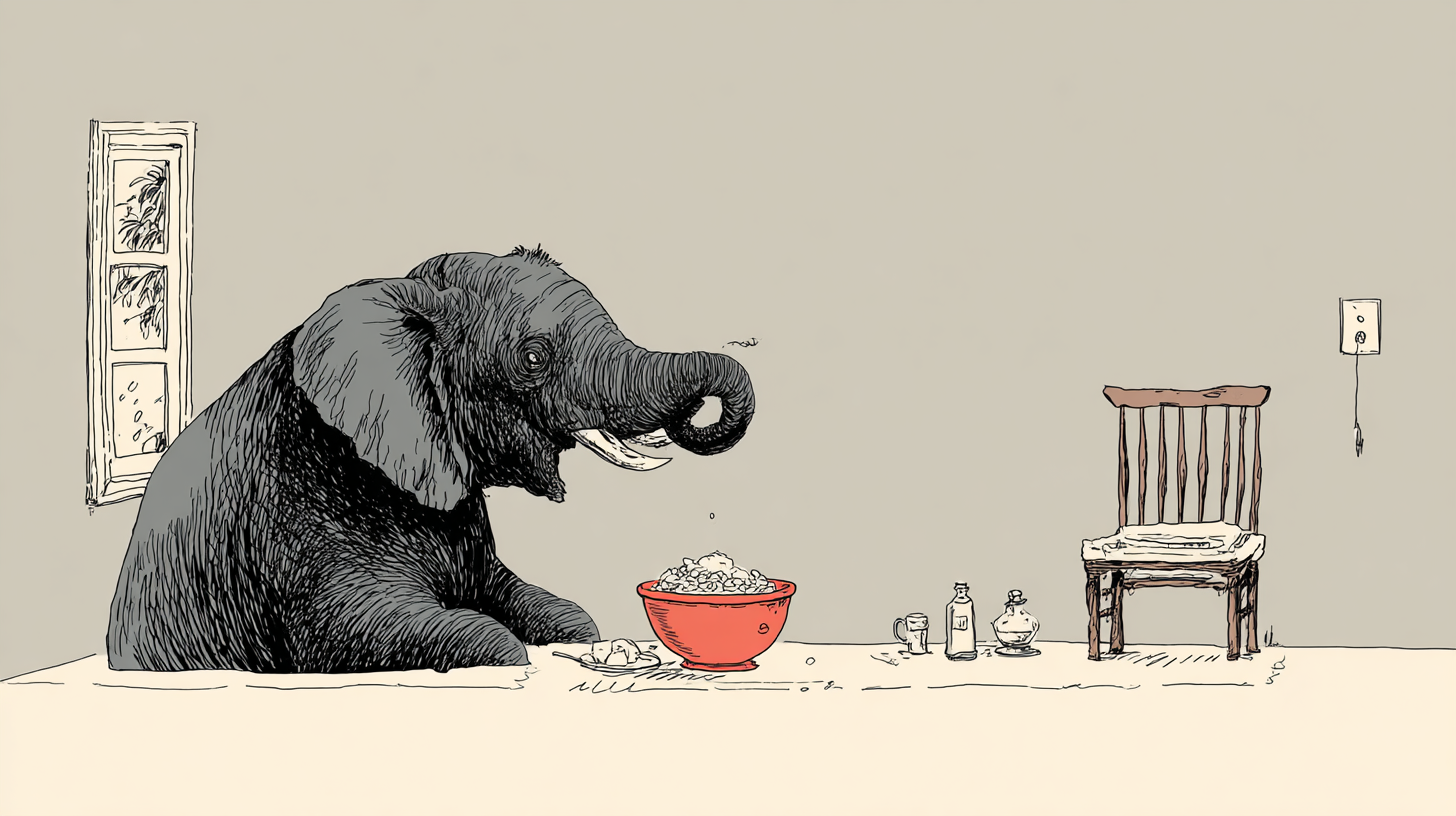
We're all tiptoeing around the elephant in the staffroom. Our education system is stuck in a comfortable rut, wrapped in layers of "that's how we've always done it" and "but what about the league tables?" It's time to strip away the niceties and ask the awkward questions that make people squirm in their ergonomic chairs. And that's why our most recent conversation with Al Kingsley has prompted us to write this piece.
When Did We Stop Asking 'Why?'
When you were five, you drove your parents mad with endless "whys"! Somehow, we've managed to educate that curiosity right out of the system. We've created schools where questioning the status quo is seen as troublemaking rather than the essential thinking we supposedly want to develop.
The most awkward question is often the simplest: Why are we doing this? Why this curriculum? Why these assessments? Why these structures? If your answer contains the words "Ofsted," "league tables," or "we've always done it this way," then we hate to break it to you, but you're part of the problem.
The Gatekeepers & Their Comfortable Kingdoms
Let's get properly awkward: who's actually benefiting from our current system? Is it the kids in Newcastle dealing with generational poverty? Is it the neurodivergent learner who doesn't fit neatly into our standardised boxes? Or is it the gatekeepers who've never stood at the front of a Year 9 class on a Friday afternoon but still make decisions about what 'good schools' look like?
The uncomfortable truth is that our system works brilliantly - for maintaining the status quo. It works for perpetuating privilege and for keeping those comfortable with the current system, well, comfortable. What it doesn't do is prepare young people for a world that's changing faster than a TikTok trend.
The Awkward Transition
We've spent decades cultivating an educational monoculture when what we need is a thriving rainforest. We have said it SOOOOO many times it's almost becoming noise. In our obsession with standardisation and compliance, we've created schools that are as diverse and adaptive as a field of identical cabbages.
What if we've been measuring the wrong things all along? What if the tidy rows and predictable outcomes we've been chasing are actually the opposite of what creates genuine learning and growth?
True innovation happens in the messy spaces between disciplines, in the uncomfortable moments of failure, and in the risky business of trying something that might not work. Yet we've built a system that punishes exactly these conditions.
The Digital Elephant
And whilst we're patting ourselves on the back for putting devices in classrooms while still teaching in ways that would be familiar to a Victorian schoolmaster there is another awkward truth worth repeating from pretty much every article we have ever written. Slapping an iPad in every student's hands isn't digital transformation - it's just expensive window dressing.
The real question isn't 'how can we use technology in our current system?' but 'how does technology fundamentally change what learning can and should look like?' That's the conversation that makes IT managers and senior leaders uncomfortable, because it challenges the very foundations they're standing on.
Skills vs Knowledge - Stop the Grudge Match
The skills versus knowledge debate has become tribal, with educators picking sides like they're supporting football teams. But the awkward question here is: why are we acting like it's an either/or situation?
The real world doesn't separate knowledge from skills - they're interconnected, messy, and context-dependent. Yet we've created artificial divisions that force educators to plant their flag in one camp or another, rather than embracing the complex reality of how people actually learn and grow. And to be fair, it's all underpinned by dispositions anyway so sod off with that false dichotomy!
The Most Awkward Question
Strip away all the policies, frameworks, and buzzwords, and we're left with the most awkward question of all: What's the actual purpose of education? Is it to sort and rank young people? To prepare compliant workers? To foster critical thinkers and active citizens? To develop happy, well-rounded individuals?
We're trying to do all of these things at once, and the result is a system that does none of them particularly well. We're spreading ourselves so thin across competing purposes that we've lost sight of what actually matters.
Five Awkward Questions That Should Be Making You Squirm
- If our education system is so brilliant, why are so many teachers leaving the profession? The exodus isn't just about pay - it's about purpose, autonomy, and feeling that what you do actually matters.
- Who actually benefits from our obsession with standardised testing? Hint: follow the money and the power structures.
- If we were designing education from scratch today, would it look anything like what we currently have? The fact that we're still broadly using a model designed for the industrial revolution should be setting off alarm bells.
- How much of what we're teaching will actually matter in ten years? And if the answer is 'not much,' then what the hell are we doing?
- Are we preparing young people for their future, or for our past? The world they'll inherit looks nothing like the one our education system was designed for.
The path forward isn't about having all the answers - it's about getting comfortable with asking uncomfortable questions. It's about creating spaces where challenging the status quo isn't just permitted but expected. Where psychological safety means you can question everything without fear of being labeled a troublemaker.
Education needs its awkward truth-tellers - the people willing to point out that the emperor's new clothes don't actually exist. The people willing to ask not just "how can we do this better?" but "should we be doing this at all?"
It's time to start asking the awkward questions that make us squirm. Because if we don't, we'll keep getting the same results we've always gotten - a system that works brilliantly for maintaining itself, but fails too many of the young people it's supposedly designed to serve.
So, what's your awkward question?
How Do You Eat an Elephant?
We're all tiptoeing around the elephant in the staffroom. Our education system is stuck in a comfortable rut, wrapped in layers of "that's how we've always done it" and "but what about the league tables?" It's time to strip away the niceties and ask the awkward questions that make people squirm in their ergonomic chairs. And that's why our most recent conversation with Al Kingsley has prompted us to write this piece.
When Did We Stop Asking 'Why?'
When you were five, you drove your parents mad with endless "whys"! Somehow, we've managed to educate that curiosity right out of the system. We've created schools where questioning the status quo is seen as troublemaking rather than the essential thinking we supposedly want to develop.
The most awkward question is often the simplest: Why are we doing this? Why this curriculum? Why these assessments? Why these structures? If your answer contains the words "Ofsted," "league tables," or "we've always done it this way," then we hate to break it to you, but you're part of the problem.
The Gatekeepers & Their Comfortable Kingdoms
Let's get properly awkward: who's actually benefiting from our current system? Is it the kids in Newcastle dealing with generational poverty? Is it the neurodivergent learner who doesn't fit neatly into our standardised boxes? Or is it the gatekeepers who've never stood at the front of a Year 9 class on a Friday afternoon but still make decisions about what 'good schools' look like?
The uncomfortable truth is that our system works brilliantly - for maintaining the status quo. It works for perpetuating privilege and for keeping those comfortable with the current system, well, comfortable. What it doesn't do is prepare young people for a world that's changing faster than a TikTok trend.
The Awkward Transition
We've spent decades cultivating an educational monoculture when what we need is a thriving rainforest. We have said it SOOOOO many times it's almost becoming noise. In our obsession with standardisation and compliance, we've created schools that are as diverse and adaptive as a field of identical cabbages.
What if we've been measuring the wrong things all along? What if the tidy rows and predictable outcomes we've been chasing are actually the opposite of what creates genuine learning and growth?
True innovation happens in the messy spaces between disciplines, in the uncomfortable moments of failure, and in the risky business of trying something that might not work. Yet we've built a system that punishes exactly these conditions.
The Digital Elephant
And whilst we're patting ourselves on the back for putting devices in classrooms while still teaching in ways that would be familiar to a Victorian schoolmaster there is another awkward truth worth repeating from pretty much every article we have ever written. Slapping an iPad in every student's hands isn't digital transformation - it's just expensive window dressing.
The real question isn't 'how can we use technology in our current system?' but 'how does technology fundamentally change what learning can and should look like?' That's the conversation that makes IT managers and senior leaders uncomfortable, because it challenges the very foundations they're standing on.
Skills vs Knowledge - Stop the Grudge Match
The skills versus knowledge debate has become tribal, with educators picking sides like they're supporting football teams. But the awkward question here is: why are we acting like it's an either/or situation?
The real world doesn't separate knowledge from skills - they're interconnected, messy, and context-dependent. Yet we've created artificial divisions that force educators to plant their flag in one camp or another, rather than embracing the complex reality of how people actually learn and grow. And to be fair, it's all underpinned by dispositions anyway so sod off with that false dichotomy!
The Most Awkward Question
Strip away all the policies, frameworks, and buzzwords, and we're left with the most awkward question of all: What's the actual purpose of education? Is it to sort and rank young people? To prepare compliant workers? To foster critical thinkers and active citizens? To develop happy, well-rounded individuals?
We're trying to do all of these things at once, and the result is a system that does none of them particularly well. We're spreading ourselves so thin across competing purposes that we've lost sight of what actually matters.
Five Awkward Questions That Should Be Making You Squirm
- If our education system is so brilliant, why are so many teachers leaving the profession? The exodus isn't just about pay - it's about purpose, autonomy, and feeling that what you do actually matters.
- Who actually benefits from our obsession with standardised testing? Hint: follow the money and the power structures.
- If we were designing education from scratch today, would it look anything like what we currently have? The fact that we're still broadly using a model designed for the industrial revolution should be setting off alarm bells.
- How much of what we're teaching will actually matter in ten years? And if the answer is 'not much,' then what the hell are we doing?
- Are we preparing young people for their future, or for our past? The world they'll inherit looks nothing like the one our education system was designed for.
The path forward isn't about having all the answers - it's about getting comfortable with asking uncomfortable questions. It's about creating spaces where challenging the status quo isn't just permitted but expected. Where psychological safety means you can question everything without fear of being labeled a troublemaker.
Education needs its awkward truth-tellers - the people willing to point out that the emperor's new clothes don't actually exist. The people willing to ask not just "how can we do this better?" but "should we be doing this at all?"
It's time to start asking the awkward questions that make us squirm. Because if we don't, we'll keep getting the same results we've always gotten - a system that works brilliantly for maintaining itself, but fails too many of the young people it's supposedly designed to serve.
So, what's your awkward question?