
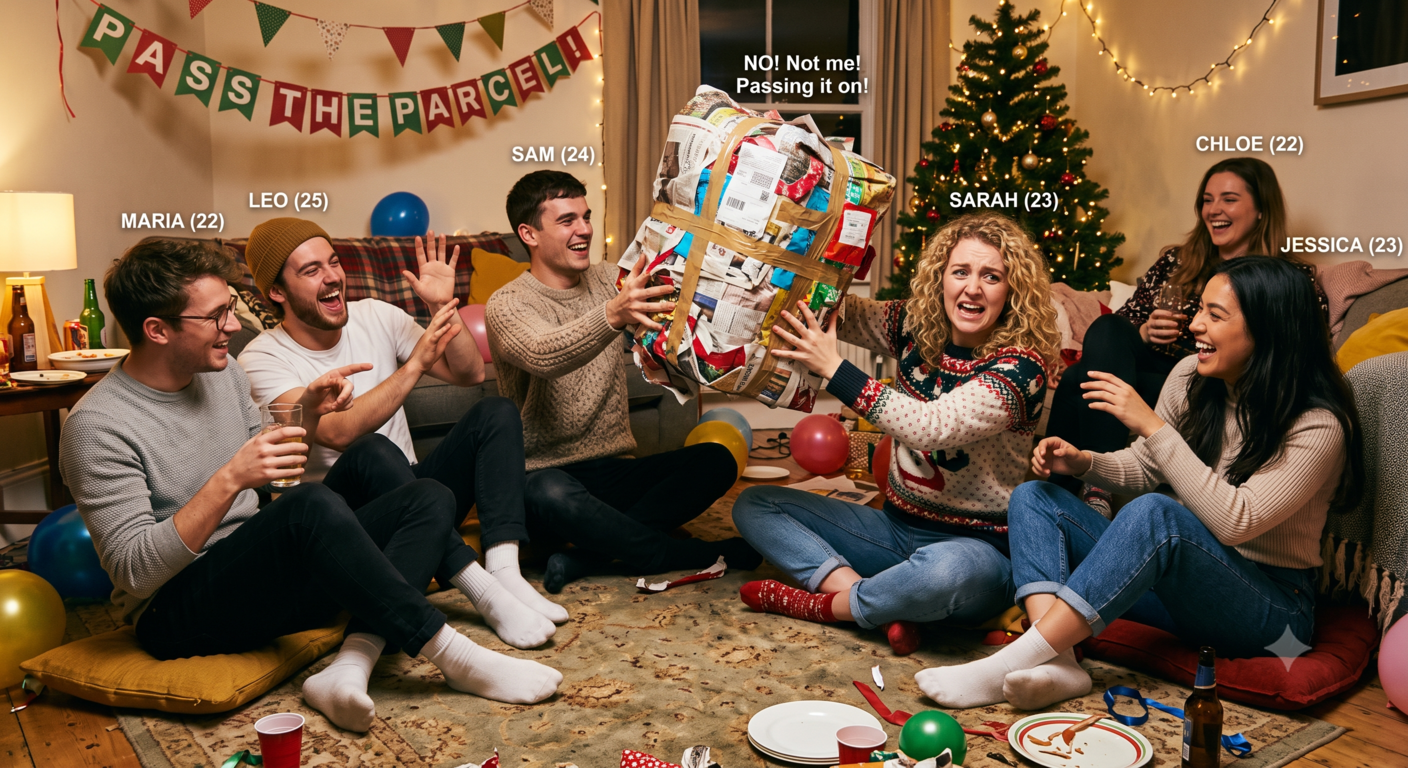
We all remember the game. Everyone sits in a circle. Music plays. A parcel gets passed from hand to hand, and when the music stops, whoever's holding it gets to tear off a layer and find out what's underneath. That's the whole point. Holding the parcel is the reward.
Somewhere between the classroom and the policy paper, we've quietly rewritten the rules. In our version, holding the parcel isn't a chance to unwrap anything. It's a liability. Nobody wants to be caught holding it when the music stops, because in our system, holding it means budget, blame, and a problem nobody upstream was willing to pay to solve. So everyone just tries to pass it on faster, before it's their turn to explain what's inside.
That's permanent exclusion. Not a solution. A rigged game, played with children, where the rules have been changed so that nobody's actually meant to open the parcel at all. We need to talk about this properly, because it's uncomfortable, and because it matters.
The Music Never Actually Stops
In the autumn term of 2024/25 (the latest public data set) alone, 3,715 children in England were permanently excluded from school. That's not a full year. That's one term. Each one of those children didn't disappear when they walked out of the gates for the last time. They got passed on, to alternative provision, to a pupil referral unit, to a local authority with a high needs budget already stretched to breaking point, to whatever comes next.
And the bit that should stop us in our tracks is the research from Coram, which found that children permanently excluded from a secondary school are, more often than not, still not in full-time state-funded education three years later. Three years. The parcel doesn't just get passed on. In a horrifying number of cases, it gets passed on until nobody's holding it at all, and a child simply falls out of the system we're all supposedly accountable for.
That's not a consequence. That's an abdication.
The Wrapping Gets Expensive
We've built a system that treats permanent exclusion as the moment the problem gets solved, when actually it's the moment the bill gets handed to someone else. IPPR's most recent analysis puts the lifetime cost to the state at a minimum of £170,000 per excluded child, in lost education, lost taxation, healthcare, and criminal justice costs. For last year's cohort alone, that's £1.6 billion. Passed from school budget to local authority, from local authority to the NHS, from the NHS to the justice system, each handoff quietly assuming someone further down the line will actually deal with the root of it.
Nobody does. That's not how the game's supposed to work. But it's how we've rigged it: opening the parcel costs money, time, and specialist support that nobody upstream has been given, so everyone just passes it on and hopes the music stops on someone else's watch.
Nobody's the Villain Here
This isn't a story about bad teachers or heartless heads. Most of the people making these calls are exhausted professionals with thirty kids in front of them, no additional SEMH support, a curriculum they didn't design, and a system that offers them a permanent exclusion as one of the only levers they've actually got. Blaming the person holding the parcel when the music stops is exactly the wrong move. They didn't design the game. They're playing it under duress, same as everyone else in the circle.
The people who built this system aren't in the room when the decision gets made. That's the actual scandal.
Unwrap the Real Problem, Don't Repackage It
A permanent exclusion feels decisive. It looks like action. Something has been done. But it's a temporary fix wearing the costume of a long-term solution, and the underlying problem, unmet need, under-resourced SEMH support, a curriculum and a system that wasn't built to flex around the kids who don't fit its shape, doesn't go anywhere. It just gets rewrapped and handed to whoever's sitting next in the circle.
If we actually want to stop the parcel circulating, we have to open it early. Properly fund alternative provision instead of treating it as an afterthought. Give schools the SEMH expertise and the time to intervene before a crisis point, not just the paperwork to record one after it's happened. Stop measuring success by how quickly a problem leaves the building, and start measuring it by whether the child is actually okay three years down the line.
Five Things We Need to Believe
1. Exclusion passes the problem, it doesn't solve it. Removing a child from a school doesn't remove the need that got them excluded in the first place. It just relocates it, usually somewhere with fewer resources to deal with it.
2. The cost doesn't disappear, it compounds. Every exclusion carries a price tag that follows the child for decades, in education, health, and justice costs. We're not saving money. We're deferring it, with interest.
3. Three years on is the real scoreboard. Success shouldn't be measured by how fast a child leaves a school roll. It should be measured by where they are, and how they're doing, years after the decision was made.
4. Teachers aren't the problem, the system handing them one lever is. Stop aiming criticism at exhausted professionals making impossible calls. Aim it at the funding gaps and support structures that leave exclusion looking like the only option on the table.
5. Early intervention is cheaper than late consequence. Every pound spent on SEMH support, smaller alternative provision caseloads, and early flagging saves multiples further down the line. Prevention isn't just kinder. It's cheaper.
We're not pretending this is simple. Behaviour in classrooms is real, safety matters, and nobody's suggesting schools should have no way of protecting staff and other pupils from genuine harm. But permanent exclusion, as it currently operates, isn't a considered last resort. It's the default move in a game nobody chose to play, one where the prize for winning is simply not being the adult left holding a child's future when the music stops.
The strength of the wolf is the pack, and a pack doesn't work by ejecting the member who's struggling the most. It works by closing ranks around them. If we want an education system that actually deserves that name, we have to stop passing the parcel and start unwrapping what's really inside it. Every single time.
Passing the Parcel
We all remember the game. Everyone sits in a circle. Music plays. A parcel gets passed from hand to hand, and when the music stops, whoever's holding it gets to tear off a layer and find out what's underneath. That's the whole point. Holding the parcel is the reward.
Somewhere between the classroom and the policy paper, we've quietly rewritten the rules. In our version, holding the parcel isn't a chance to unwrap anything. It's a liability. Nobody wants to be caught holding it when the music stops, because in our system, holding it means budget, blame, and a problem nobody upstream was willing to pay to solve. So everyone just tries to pass it on faster, before it's their turn to explain what's inside.
That's permanent exclusion. Not a solution. A rigged game, played with children, where the rules have been changed so that nobody's actually meant to open the parcel at all. We need to talk about this properly, because it's uncomfortable, and because it matters.
The Music Never Actually Stops
In the autumn term of 2024/25 (the latest public data set) alone, 3,715 children in England were permanently excluded from school. That's not a full year. That's one term. Each one of those children didn't disappear when they walked out of the gates for the last time. They got passed on, to alternative provision, to a pupil referral unit, to a local authority with a high needs budget already stretched to breaking point, to whatever comes next.
And the bit that should stop us in our tracks is the research from Coram, which found that children permanently excluded from a secondary school are, more often than not, still not in full-time state-funded education three years later. Three years. The parcel doesn't just get passed on. In a horrifying number of cases, it gets passed on until nobody's holding it at all, and a child simply falls out of the system we're all supposedly accountable for.
That's not a consequence. That's an abdication.
The Wrapping Gets Expensive
We've built a system that treats permanent exclusion as the moment the problem gets solved, when actually it's the moment the bill gets handed to someone else. IPPR's most recent analysis puts the lifetime cost to the state at a minimum of £170,000 per excluded child, in lost education, lost taxation, healthcare, and criminal justice costs. For last year's cohort alone, that's £1.6 billion. Passed from school budget to local authority, from local authority to the NHS, from the NHS to the justice system, each handoff quietly assuming someone further down the line will actually deal with the root of it.
Nobody does. That's not how the game's supposed to work. But it's how we've rigged it: opening the parcel costs money, time, and specialist support that nobody upstream has been given, so everyone just passes it on and hopes the music stops on someone else's watch.
Nobody's the Villain Here
This isn't a story about bad teachers or heartless heads. Most of the people making these calls are exhausted professionals with thirty kids in front of them, no additional SEMH support, a curriculum they didn't design, and a system that offers them a permanent exclusion as one of the only levers they've actually got. Blaming the person holding the parcel when the music stops is exactly the wrong move. They didn't design the game. They're playing it under duress, same as everyone else in the circle.
The people who built this system aren't in the room when the decision gets made. That's the actual scandal.
Unwrap the Real Problem, Don't Repackage It
A permanent exclusion feels decisive. It looks like action. Something has been done. But it's a temporary fix wearing the costume of a long-term solution, and the underlying problem, unmet need, under-resourced SEMH support, a curriculum and a system that wasn't built to flex around the kids who don't fit its shape, doesn't go anywhere. It just gets rewrapped and handed to whoever's sitting next in the circle.
If we actually want to stop the parcel circulating, we have to open it early. Properly fund alternative provision instead of treating it as an afterthought. Give schools the SEMH expertise and the time to intervene before a crisis point, not just the paperwork to record one after it's happened. Stop measuring success by how quickly a problem leaves the building, and start measuring it by whether the child is actually okay three years down the line.
Five Things We Need to Believe
1. Exclusion passes the problem, it doesn't solve it. Removing a child from a school doesn't remove the need that got them excluded in the first place. It just relocates it, usually somewhere with fewer resources to deal with it.
2. The cost doesn't disappear, it compounds. Every exclusion carries a price tag that follows the child for decades, in education, health, and justice costs. We're not saving money. We're deferring it, with interest.
3. Three years on is the real scoreboard. Success shouldn't be measured by how fast a child leaves a school roll. It should be measured by where they are, and how they're doing, years after the decision was made.
4. Teachers aren't the problem, the system handing them one lever is. Stop aiming criticism at exhausted professionals making impossible calls. Aim it at the funding gaps and support structures that leave exclusion looking like the only option on the table.
5. Early intervention is cheaper than late consequence. Every pound spent on SEMH support, smaller alternative provision caseloads, and early flagging saves multiples further down the line. Prevention isn't just kinder. It's cheaper.
We're not pretending this is simple. Behaviour in classrooms is real, safety matters, and nobody's suggesting schools should have no way of protecting staff and other pupils from genuine harm. But permanent exclusion, as it currently operates, isn't a considered last resort. It's the default move in a game nobody chose to play, one where the prize for winning is simply not being the adult left holding a child's future when the music stops.
The strength of the wolf is the pack, and a pack doesn't work by ejecting the member who's struggling the most. It works by closing ranks around them. If we want an education system that actually deserves that name, we have to stop passing the parcel and start unwrapping what's really inside it. Every single time.