
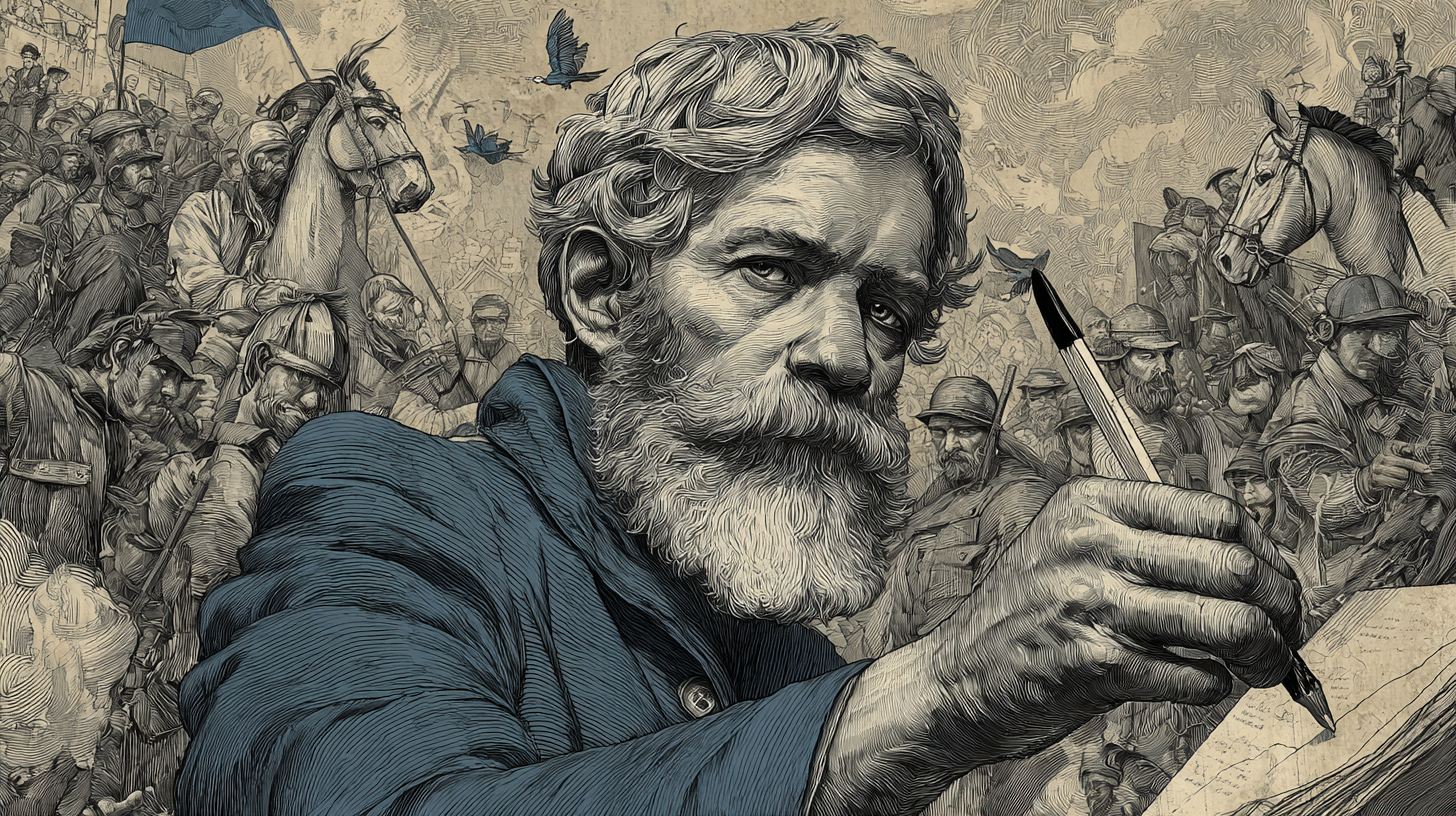
Should I be writing this by hand, waiting for someone to collect it in precisely 2 hours and 15 minutes from my little square desk in that freezing cold sports hall? Sounds bloody ridiculous, doesn't it? Yet here we are, making our young people jump through these exact same hoops like it's still 1952. In today's world, that's not just outdated - it's criminally bonkers.
The world is a messy, chaotic, beautiful mess of ambiguity. Everything's changing at breakneck speed, and most of us are doing a decent job of adapting (well, most of the time - and when we cock it up, that's called learning, eh?). So why does education move at the pace of a drugged sloth? It's time to stop messing about with incremental changes and embrace a proper rebellious approach to assessment. We need to bin off these rigid, Victorian-era testing methods and create something that actually makes sense for the 21st century. Not tomorrow. Not next year. Now.
Assessment as an Infinite Game
Learning isn't some neat little race with a finish line. It's an infinite game, but we're treating it like a 100-metre sprint. We need to completely reimagine assessment as a journey, not a destination. A constant flow of feedback and growth that actually helps learners develop, not just tick boxes on some standardised form.
And yes, we know what you're thinking - "one size fits all is easier to manage." But, and we’ve said it many times before: one size fits all usually means one size fits none. We need assessment that adapts to each learner, that meets them where they are and helps them grow from there. Is it going to be messy? Absolutely. Are our educators going to need support? You bet your arse they are. But since when did "it's a bit difficult" become a reason not to do the right thing?
Iterative Assessment: Driving Continuous Improvement
Just like the world around us is constantly changing, our assessment practices need to keep up. We need to be iterating, experimenting, and yes, sometimes failing. Because that's how real learning happens - through trying stuff out, learning from it, and making it better.
When was the last time you did anything perfectly the first time? Never, right? So why do we expect our assessment systems to be perfect straight out of the gate? We need to build a culture where it's okay to try new approaches, learn from them, and keep improving.
The Problem with High-Stakes Exams
Why have we given exams this god-like status in our education system? It's like we've created this cult where your entire future depends on how well you can remember stuff under pressure for a few hours in June. It's mental.
Yes, exams have their place. But they shouldn't be the be-all and end-all. We need a proper mix of assessment methods that give us a real picture of what learners can actually do. Projects that matter. Problems that need solving. Work that actually means something in the real world.
The Need for Speed: Move Fast and Break Things
The world moves at lightning speed, but our assessment systems are still operating on dial-up. We need to find ways to iterate and adapt quickly, to respond to changes in real-time, not decades later.
Why are we still asking kids to write handwritten letters? Yes, some of us still scribble notes by hand, but come on - when was the last time you hand-wrote a formal letter? The world has moved on, and we need to catch up. (We don’t think writing isn’t necessary by the way - we think it’s the over-reliance on writing that is unnecessary.)
Fueling the Change
Right now, we're running our assessment system like we're trying to cross the country on spare change found down the back of the sofa. We're going to the petrol station, adding a fiver’s worth, just enough to keep the engine ticking over, but never enough to actually get anywhere meaningful.
It's time to stop this penny-pinching approach to change. We need proper investment - in time, in resources, in training, in technology. We need to embrace rebel ideas. Because right now, we're not just failing to prepare our learners for the future - we're failing to prepare them for the present.
5 Ways to Implement Assessment Changes
1. Embrace iteration like it's your new best mate - refine and tweak. Slowly maybe but keep moving.
2. Make assessment personal - because one size fits nobody, meet learners where are at and check what each one of them know.
3. Mix up the methods - exams aren't the only game in town so think about different ways to check understanding, both formatively and summatively.
4. Speed up the feedback loop - learning happens in real-time so make the processes more streamlined so we can respond quickly to change.
5. Invest properly - stop with the £5 fuel mentality; invest time, energy and resources to transform assessment practices that are more equitable, effective and learner-centred.
The time for tiptoeing around assessment reform is over. We need bold, rebellious ideas that actually reflect how learning happens in the real world. Are you ready to join the revolution, or are you going to keep marking essays like it's 1952?
Let's stop putting in fivers and start making the bold investments that our learners deserve. The future of education isn't waiting for your permission slip.
Rebel Ideas: Rethinking Assessment in an Infinite Game
Should I be writing this by hand, waiting for someone to collect it in precisely 2 hours and 15 minutes from my little square desk in that freezing cold sports hall? Sounds bloody ridiculous, doesn't it? Yet here we are, making our young people jump through these exact same hoops like it's still 1952. In today's world, that's not just outdated - it's criminally bonkers.
The world is a messy, chaotic, beautiful mess of ambiguity. Everything's changing at breakneck speed, and most of us are doing a decent job of adapting (well, most of the time - and when we cock it up, that's called learning, eh?). So why does education move at the pace of a drugged sloth? It's time to stop messing about with incremental changes and embrace a proper rebellious approach to assessment. We need to bin off these rigid, Victorian-era testing methods and create something that actually makes sense for the 21st century. Not tomorrow. Not next year. Now.
Assessment as an Infinite Game
Learning isn't some neat little race with a finish line. It's an infinite game, but we're treating it like a 100-metre sprint. We need to completely reimagine assessment as a journey, not a destination. A constant flow of feedback and growth that actually helps learners develop, not just tick boxes on some standardised form.
And yes, we know what you're thinking - "one size fits all is easier to manage." But, and we’ve said it many times before: one size fits all usually means one size fits none. We need assessment that adapts to each learner, that meets them where they are and helps them grow from there. Is it going to be messy? Absolutely. Are our educators going to need support? You bet your arse they are. But since when did "it's a bit difficult" become a reason not to do the right thing?
Iterative Assessment: Driving Continuous Improvement
Just like the world around us is constantly changing, our assessment practices need to keep up. We need to be iterating, experimenting, and yes, sometimes failing. Because that's how real learning happens - through trying stuff out, learning from it, and making it better.
When was the last time you did anything perfectly the first time? Never, right? So why do we expect our assessment systems to be perfect straight out of the gate? We need to build a culture where it's okay to try new approaches, learn from them, and keep improving.
The Problem with High-Stakes Exams
Why have we given exams this god-like status in our education system? It's like we've created this cult where your entire future depends on how well you can remember stuff under pressure for a few hours in June. It's mental.
Yes, exams have their place. But they shouldn't be the be-all and end-all. We need a proper mix of assessment methods that give us a real picture of what learners can actually do. Projects that matter. Problems that need solving. Work that actually means something in the real world.
The Need for Speed: Move Fast and Break Things
The world moves at lightning speed, but our assessment systems are still operating on dial-up. We need to find ways to iterate and adapt quickly, to respond to changes in real-time, not decades later.
Why are we still asking kids to write handwritten letters? Yes, some of us still scribble notes by hand, but come on - when was the last time you hand-wrote a formal letter? The world has moved on, and we need to catch up. (We don’t think writing isn’t necessary by the way - we think it’s the over-reliance on writing that is unnecessary.)
Fueling the Change
Right now, we're running our assessment system like we're trying to cross the country on spare change found down the back of the sofa. We're going to the petrol station, adding a fiver’s worth, just enough to keep the engine ticking over, but never enough to actually get anywhere meaningful.
It's time to stop this penny-pinching approach to change. We need proper investment - in time, in resources, in training, in technology. We need to embrace rebel ideas. Because right now, we're not just failing to prepare our learners for the future - we're failing to prepare them for the present.
5 Ways to Implement Assessment Changes
1. Embrace iteration like it's your new best mate - refine and tweak. Slowly maybe but keep moving.
2. Make assessment personal - because one size fits nobody, meet learners where are at and check what each one of them know.
3. Mix up the methods - exams aren't the only game in town so think about different ways to check understanding, both formatively and summatively.
4. Speed up the feedback loop - learning happens in real-time so make the processes more streamlined so we can respond quickly to change.
5. Invest properly - stop with the £5 fuel mentality; invest time, energy and resources to transform assessment practices that are more equitable, effective and learner-centred.
The time for tiptoeing around assessment reform is over. We need bold, rebellious ideas that actually reflect how learning happens in the real world. Are you ready to join the revolution, or are you going to keep marking essays like it's 1952?
Let's stop putting in fivers and start making the bold investments that our learners deserve. The future of education isn't waiting for your permission slip.