
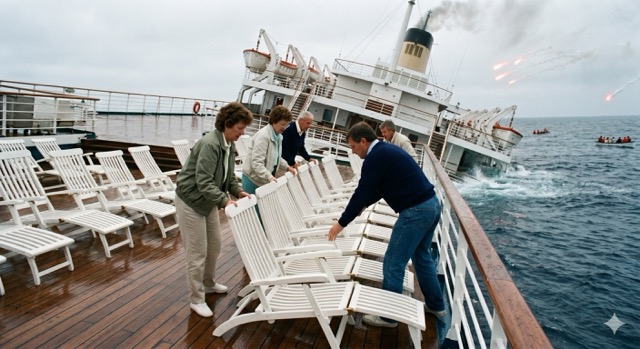
Something remarkable happened in education over the past eighteen months. Governments got busy. Properly busy. Reviews commissioned, white papers published, frameworks rewritten, laws passed, departments dismantled, bans enacted. If activity were the same as progress, we would be living through a golden age.
We are not. We are living through a year of tinkering, and it is worth naming it for what it is.
Look at everything that moved
England had a bumper year. The Francis Review landed in November, scrapping the EBacc, 'trimming' exam time by 10% (WTF?!) and adding diagnostic tests in Year 8. The SEND white paper followed in February with four billion pounds and a decade-long plan to fold more children into mainstream classrooms. The Children's Wellbeing and Schools Act got Royal Assent in April, bringing breakfast clubs, free school meals, a cap on branded uniform items and a duty on schools to follow national guidance making them phone-free by default. The same Act handed ministers a new power over children's access to social media, then sent the actual rules off to consultation. Ofsted binned its single-word grades and rolled out colour-coded report cards.
Across the Atlantic, the Trump administration spent the year taking the federal Department of Education apart, scattering its functions across Labor, Health and Human Services, the Interior and State. Australia banned under-16s from social media, the first country in the world to do it. Britain, France, California and Texas all started circling the same idea.
That is a phenomenal amount of motion. Breakfast clubs are real help for hungry kids. Report cards beat a brutal one-word verdict (dare we say it?). Folding more children into mainstream classrooms is a noble aim. None of it is worthless.
But step back and ask the awkward question:
"What did any of it change about what happens when a child sits down to learn?"
Rearranging, not rebuilding
The American story is the tell. The entire federal architecture of schooling was torn up and redistributed, the biggest structural upheaval in two generations. And spending on the big programmes, Title I for disadvantaged kids and special education funding, came out the other end at almost exactly the level it sat at when Biden left office. Maximum disruption, near-identical substance. The deckchairs got a thorough rearranging.
Ofsted tells the same story in miniature. The single word is gone, and good riddance. But the high-stakes inspection survives, the context-blind judgement survives, and the school in a deprived community that knows it will struggle to be called "Strong" survives too. Leaders are already calling it a rebrand. New packaging, same pressure.
None of these reforms asks the question sitting underneath all of them. What is school actually for? They assume the answer is settled and busy themselves with the plumbing.
The ban that decides nothing
The boldest move of the year turns out to be a flinch dressed as courage. Australia did the blunt thing and banned under-16s outright. Britain did not (yet). So far, our new Act stopped short of a ban and instead gave ministers a duty to impose "some form of age or functionality restrictions" once a consultation reports back. That is the legislative equivalent of promising to decide later.
And even where bans do bite, they may not do what we hope. When Australia removed millions of under-16 accounts in the first month, researchers were quick to point out that nobody actually knew whether harm had fallen or simply migrated somewhere darker and less visible. A ban treats the symptom and outsources the thinking. It tells children what they cannot touch and teaches them nothing about navigating the world they are inheriting. That is the opposite of digital literacy. It is digital abstinence, and abstinence has a poor track record.
Then the Middle East turned the lights off
While four governments rearranged their furniture, something happened that showed us what we had actually built. It came at a terrible human cost, and we do not reach for it lightly. After the strikes on Iran, the country shut its schools and pushed roughly sixteen million children onto a state online platform built to hold three. It buckled. Internet blackouts cut whole regions off. Effective teaching time fell by more than 60%. Around two million children, the poorest, dropped out of learning altogether because they had no device or no connection. In the Gulf, the UAE moved its entire system to distance learning for weeks as the conflict spread.
We have seen this film before. We watched it through the pandemic and swore we had learned the lesson. We had not.
The moment the building was taken away, the learning collapsed, because we had never built anything that could survive without the building. We digitised the classroom without ever rethinking it. An iPad running a worksheet is still a worksheet. A state platform that falls over the moment it is needed was never resilience. It was the factory model with a login screen.
That is the brutal clarity a crisis brings. Every review and framework and ban assumes the system stands still long enough to be tinkered with. Iran is the reminder that it does not, and that a system built for compliance has nothing to fall back on when the ground moves.
What tinkering cannot reach
The reformers of the past year were answering real problems. Hungry children, crude inspection grades, a SEND system in a mess, genuine harm to young minds online. We do not sneer at any of it. But every fix accepted the existing machine and adjusted a dial. Not one asked whether the machine itself is the problem.
That is the difference between rearranging and rebuilding. The machine is not broken. It works exactly as designed. It was simply designed for a world that no longer exists, and no amount of polishing the parts changes what the thing was built to do. You can rewrite every framework in the building and still be running a factory. You can ban every app and still teach a child nothing about judgement. You can dismantle an entire government department and leave the experience of learning untouched.
The work that matters is quieter than this year's headlines, and far harder. It is building learning that holds when the building disappears. Learning that travels with the child rather than the timetable. Judgement that no ban can install and no platform can crash. We will not get there by rearranging deckchairs, however energetically.
Five things worth holding onto
1. Activity is not progress. A year stuffed with reviews, white papers and bans can leave the experience of learning exactly where it was. Judge every reform by what changes for the child, not by how much noise it made.
2. Rebranding is not reform. When the single word goes but the high-stakes pressure stays, nothing real has shifted. Watch for the dial that gets turned while the machine keeps running.
3. A ban outsources the thinking. Removing access is not the same as building judgement. Our kids need to learn navigation, not abstinence, and that has to be taught rather than legislated away.
4. Crisis reveals what we built. Iran showed a system that fell apart the moment the building vanished, because the building was the only thing holding it up. Build learning that travels with the learner.
5. Start with purpose or do not start at all. Every reform this year fiddled with the plumbing and skipped the question beneath it. What is school for? Answer that first, and the rest stops being guesswork.
We can keep applauding the motion, or we can demand the rebuild. A busy year is not the same as a better one, and we have had quite enough of busy. The machinery has been rearranged, relabelled and redistributed across four continents, and a child sitting down to learn this morning would struggle to tell the difference. That is the verdict on a year of tinkering. The question for the next one is whether we are finally brave enough to stop fiddling with the factory and build something that was never meant to be a factory at all. The pen is in our hands. The blank page is waiting. Let us write something worth keeping.
The Year We Rearranged the Deckchairs
Something remarkable happened in education over the past eighteen months. Governments got busy. Properly busy. Reviews commissioned, white papers published, frameworks rewritten, laws passed, departments dismantled, bans enacted. If activity were the same as progress, we would be living through a golden age.
We are not. We are living through a year of tinkering, and it is worth naming it for what it is.
Look at everything that moved
England had a bumper year. The Francis Review landed in November, scrapping the EBacc, 'trimming' exam time by 10% (WTF?!) and adding diagnostic tests in Year 8. The SEND white paper followed in February with four billion pounds and a decade-long plan to fold more children into mainstream classrooms. The Children's Wellbeing and Schools Act got Royal Assent in April, bringing breakfast clubs, free school meals, a cap on branded uniform items and a duty on schools to follow national guidance making them phone-free by default. The same Act handed ministers a new power over children's access to social media, then sent the actual rules off to consultation. Ofsted binned its single-word grades and rolled out colour-coded report cards.
Across the Atlantic, the Trump administration spent the year taking the federal Department of Education apart, scattering its functions across Labor, Health and Human Services, the Interior and State. Australia banned under-16s from social media, the first country in the world to do it. Britain, France, California and Texas all started circling the same idea.
That is a phenomenal amount of motion. Breakfast clubs are real help for hungry kids. Report cards beat a brutal one-word verdict (dare we say it?). Folding more children into mainstream classrooms is a noble aim. None of it is worthless.
But step back and ask the awkward question:
"What did any of it change about what happens when a child sits down to learn?"
Rearranging, not rebuilding
The American story is the tell. The entire federal architecture of schooling was torn up and redistributed, the biggest structural upheaval in two generations. And spending on the big programmes, Title I for disadvantaged kids and special education funding, came out the other end at almost exactly the level it sat at when Biden left office. Maximum disruption, near-identical substance. The deckchairs got a thorough rearranging.
Ofsted tells the same story in miniature. The single word is gone, and good riddance. But the high-stakes inspection survives, the context-blind judgement survives, and the school in a deprived community that knows it will struggle to be called "Strong" survives too. Leaders are already calling it a rebrand. New packaging, same pressure.
None of these reforms asks the question sitting underneath all of them. What is school actually for? They assume the answer is settled and busy themselves with the plumbing.
The ban that decides nothing
The boldest move of the year turns out to be a flinch dressed as courage. Australia did the blunt thing and banned under-16s outright. Britain did not (yet). So far, our new Act stopped short of a ban and instead gave ministers a duty to impose "some form of age or functionality restrictions" once a consultation reports back. That is the legislative equivalent of promising to decide later.
And even where bans do bite, they may not do what we hope. When Australia removed millions of under-16 accounts in the first month, researchers were quick to point out that nobody actually knew whether harm had fallen or simply migrated somewhere darker and less visible. A ban treats the symptom and outsources the thinking. It tells children what they cannot touch and teaches them nothing about navigating the world they are inheriting. That is the opposite of digital literacy. It is digital abstinence, and abstinence has a poor track record.
Then the Middle East turned the lights off
While four governments rearranged their furniture, something happened that showed us what we had actually built. It came at a terrible human cost, and we do not reach for it lightly. After the strikes on Iran, the country shut its schools and pushed roughly sixteen million children onto a state online platform built to hold three. It buckled. Internet blackouts cut whole regions off. Effective teaching time fell by more than 60%. Around two million children, the poorest, dropped out of learning altogether because they had no device or no connection. In the Gulf, the UAE moved its entire system to distance learning for weeks as the conflict spread.
We have seen this film before. We watched it through the pandemic and swore we had learned the lesson. We had not.
The moment the building was taken away, the learning collapsed, because we had never built anything that could survive without the building. We digitised the classroom without ever rethinking it. An iPad running a worksheet is still a worksheet. A state platform that falls over the moment it is needed was never resilience. It was the factory model with a login screen.
That is the brutal clarity a crisis brings. Every review and framework and ban assumes the system stands still long enough to be tinkered with. Iran is the reminder that it does not, and that a system built for compliance has nothing to fall back on when the ground moves.
What tinkering cannot reach
The reformers of the past year were answering real problems. Hungry children, crude inspection grades, a SEND system in a mess, genuine harm to young minds online. We do not sneer at any of it. But every fix accepted the existing machine and adjusted a dial. Not one asked whether the machine itself is the problem.
That is the difference between rearranging and rebuilding. The machine is not broken. It works exactly as designed. It was simply designed for a world that no longer exists, and no amount of polishing the parts changes what the thing was built to do. You can rewrite every framework in the building and still be running a factory. You can ban every app and still teach a child nothing about judgement. You can dismantle an entire government department and leave the experience of learning untouched.
The work that matters is quieter than this year's headlines, and far harder. It is building learning that holds when the building disappears. Learning that travels with the child rather than the timetable. Judgement that no ban can install and no platform can crash. We will not get there by rearranging deckchairs, however energetically.
Five things worth holding onto
1. Activity is not progress. A year stuffed with reviews, white papers and bans can leave the experience of learning exactly where it was. Judge every reform by what changes for the child, not by how much noise it made.
2. Rebranding is not reform. When the single word goes but the high-stakes pressure stays, nothing real has shifted. Watch for the dial that gets turned while the machine keeps running.
3. A ban outsources the thinking. Removing access is not the same as building judgement. Our kids need to learn navigation, not abstinence, and that has to be taught rather than legislated away.
4. Crisis reveals what we built. Iran showed a system that fell apart the moment the building vanished, because the building was the only thing holding it up. Build learning that travels with the learner.
5. Start with purpose or do not start at all. Every reform this year fiddled with the plumbing and skipped the question beneath it. What is school for? Answer that first, and the rest stops being guesswork.
We can keep applauding the motion, or we can demand the rebuild. A busy year is not the same as a better one, and we have had quite enough of busy. The machinery has been rearranged, relabelled and redistributed across four continents, and a child sitting down to learn this morning would struggle to tell the difference. That is the verdict on a year of tinkering. The question for the next one is whether we are finally brave enough to stop fiddling with the factory and build something that was never meant to be a factory at all. The pen is in our hands. The blank page is waiting. Let us write something worth keeping.