
When Monologues Die, Learning Thrives
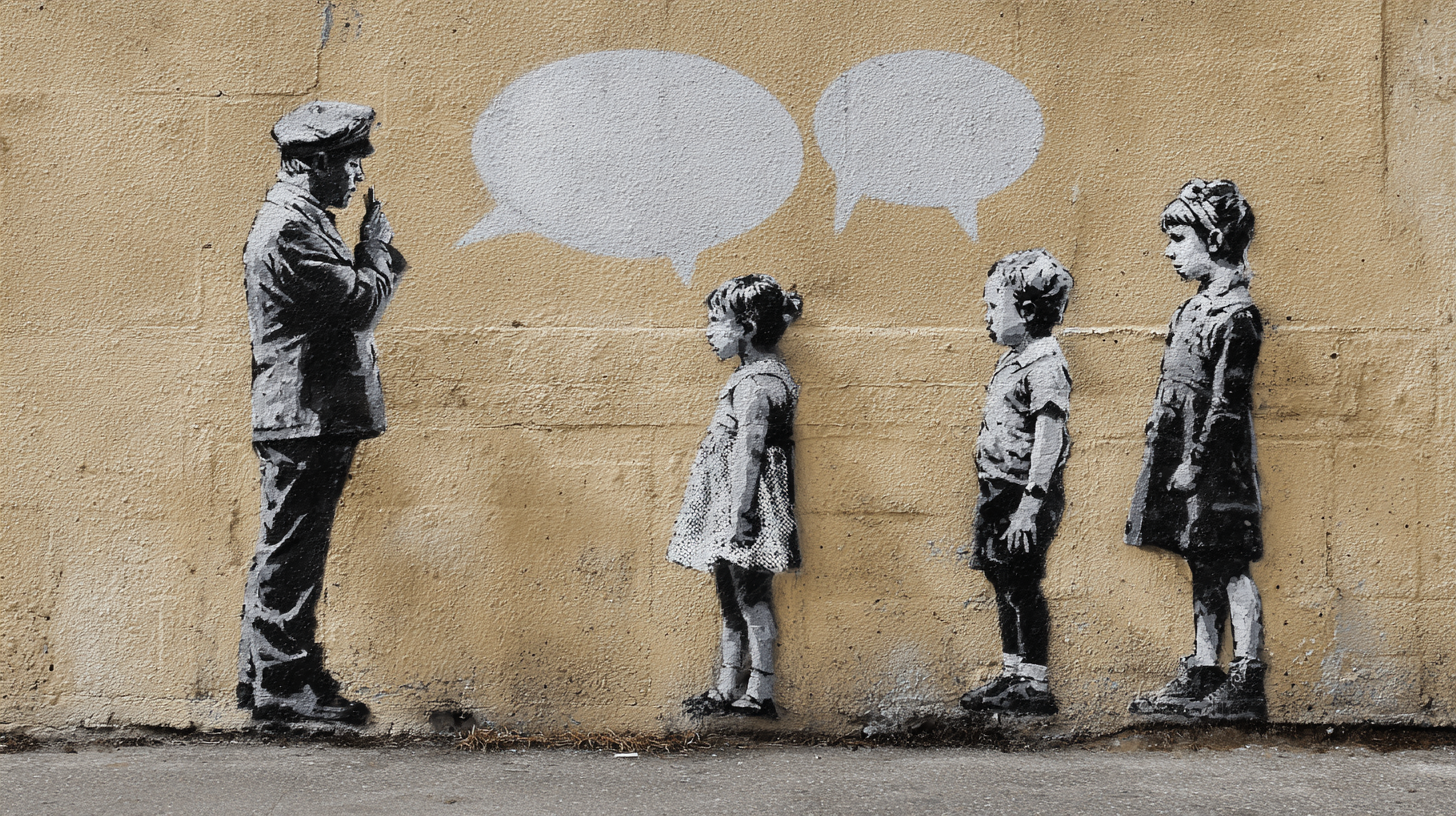
For too long, we've been trapped in a system where learning means shutting up and listening while some all-knowing guru at the front downloads wisdom into passive brains. We have said it almost ad infinitum. It's education as a one-way street - teacher speaks, learner absorbs. That's not how minds work, not how real worlds operate.
Learning isn't a monologue; it's a dialogue. It's not a lecture; it's a conversation. And it's time we started acting like it.
The Monologue Model is Dead (or Should Be)
Our education system is stuck in a bizarre time warp where the 'sage on the stage' still reigns supreme. We've got teachers talking at students rather than with them. We've got leaders talking at teachers rather than with them. We've got policymakers talking at school leaders rather than with them. It's a cascading waterfall of one-way communication, and it's drowning our potential.
I (Ben) remember being at teacher training college when we were told that teaching was moving from sage on the stage to 'guide on the side'. That was 2004. Let that sink in. IT HAS NOT CHANGED!
This isn't just ineffective; it's bloody insulting. It assumes that knowledge flows in one direction only - from the enlightened few to the ignorant masses. It treats learners as empty vessels to be filled rather than active participants in their own education. It's hierarchical, patronising, and completely at odds with how genuine understanding develops. And it gives zero credence to the way the world has changed with access to information.
Where the Magic Actually Happens
If we were to think about the last time we really learned something - not just memorised it for a test, but properly internalised it. Chances are, it involved some form of dialogue. Maybe you asked questions. Maybe you challenged assumptions. Maybe you tried to explain it to someone else. Maybe you made connections to what you already knew.
Real learning happens in the spaces between talking and listening, in the back-and-forth of ideas, in the messy middle ground where thoughts collide and connect. It's not neat, and it's not linear, and it sure as hell isn't passive. Space not stuff.
When learning becomes conversational, everything changes. Power dynamics shift. Engagement soars. Creativity flourishes. The classroom (whether physical or virtual) transforms from a one-way broadcast into a collaborative thinking space where everyone has something to contribute and everyone has something to learn.
Breaking Down the Barriers to Dialogue
So why aren't all our learning environments pulsing with rich, meaningful dialogue? Because we've built a system that actively discourages it:
- We've created assessment structures that value regurgitation over exploration
- We've trained teachers to fear student-led discussions as 'loss of control'
- We've packed curricula so full that there's "no time" for genuine exchange
- We've fostered cultures where being wrong is penalised rather than valued
- We've designed physical spaces that reinforce hierarchy rather than community
These aren't insurmountable obstacles; they're design choices. Bad ones. And we can make different choices.
The Hierarchy of Control is Killing Learning
This monologue model doesn't just stifle learning; it reinforces a hierarchy of control that's toxic to education at every level. Think about it - we've created a system where:
- Policymakers dictate to school leaders
- School leaders dictate to teachers
- Teachers dictate to students
- And everyone's too busy talking to actually listen
It's a power trip masquerading as education, and it's no wonder that both students and teachers are burning out in record numbers. Nobody thrives when they're constantly being talked at rather than engaged with.
Reimagining Learning as True Conversation
Shifting to a conversational model of learning isn't about throwing out structure or standards. It's about recognising that genuine learning is inherently social, collaborative, and dialogic. It's about creating spaces where:
- Questions are valued as much as answers
- Every voice matters, regardless of status or seniority
- Ideas are built upon rather than simply judged
- Disagreement is welcomed as an opportunity for growth
- The unknown is explored together, not feared
This isn't some utopian fantasy. It's happening right now in pockets of innovation across the world - in classrooms where teachers have rejected the monologue and embraced the dialogue, in schools where leaders listen as much as they speak, in universities where students are co-creators of knowledge rather than consumers of content.
Digital - Both Problem and Potential
Technology has transformed how we communicate, yet in education, we often use digital tools to reinforce the old monologue model rather than create new possibilities for dialogue. We've got PowerPoints instead of chalk, recorded lectures instead of live ones, and digital worksheets instead of paper ones. Same sh!t, different day.
But digital tools have extraordinary potential to transform learning into conversation when used thoughtfully. Asynchronous discussions can give voice to those who might remain silent in person. Collaborative platforms can allow ideas to develop over time. Global connections can bring diverse perspectives into every learning environment.
The question isn't whether technology has a place in conversational learning, but whether we have the imagination to use it for genuine dialogue rather than digital monologues.
From "I Know" to "Let's Find Out"
At its heart, shifting from monologue to dialogue requires a fundamental change in how we think about knowledge and expertise. It means moving from "I know" to "let's find out" - from certainty to curiosity, from answers to exploration.
This isn't about diminishing expertise or pretending that all opinions are equally valid. It's about recognising that knowledge isn't a fixed commodity to be passed from one person to another. It's a living, evolving ecosystem that grows through engagement, challenge, and collaboration.
When teachers position themselves as fellow explorers rather than omniscient authorities, the entire dynamic of learning transforms. Students become partners in the journey rather than passengers. Questions become invitations rather than tests. Mistakes become opportunities rather than failures.
Making It Happen
- Rethink Physical and Digital Spaces - Design environments that facilitate dialogue rather than broadcast. Circles instead of rows. Forums instead of feeds. Spaces that say "let's talk" rather than "listen up."
- Value Process Over Product - Shift assessment to capture the quality of thinking and dialogue, not just the final answer. Make visible the messy, non-linear path of authentic learning.
- Develop Dialogue Skills - Explicitly teach and practise the art of productive conversation. How to listen deeply, question thoughtfully, disagree respectfully, and build on others' ideas.
- Create Time and Space - Strip away the clutter in our curricula and schedules to make room for meaningful dialogue. Quality of conversation trumps quantity of content every time.
- Lead by Listening - Model dialogue at every level of the system. Leaders who listen. Policymakers who engage. Teachers who learn from students as much as students learn from them.
The shift from monologue to dialogue in education isn't just a pedagogical tweak; it's a revolution in how we understand learning itself. It's about recognising that knowledge doesn't flow one way but circulates in a complex web of exchange. It's about valuing every voice in the conversation, not just the loudest or most credentialed.
It's time to stop talking at our learners and start talking with them. Because learning isn't a lecture; it's a conversation. And the sooner we embrace that reality, the sooner we can create an education system worthy of our collective potential.